Tracking job applications manually in a spreadsheet, notes app, or email inbox, leads to missed follow-ups, duplicate submissions, and lost opportunities. A dedicated job application tracker solves this by giving you a single, organized view of every role you have applied for, every interview scheduled, and every decision pending. If you are actively job hunting in 2026, here is a breakdown of the best tools available and how to make the most of them.
Why Use a Job Application Tracker?
Organized applicants respond faster. Research suggests that prompt follow-up, within 24-48 hours of an interview, significantly improves offer rates. A tracker with reminder functionality keeps that cadence on autopilot.
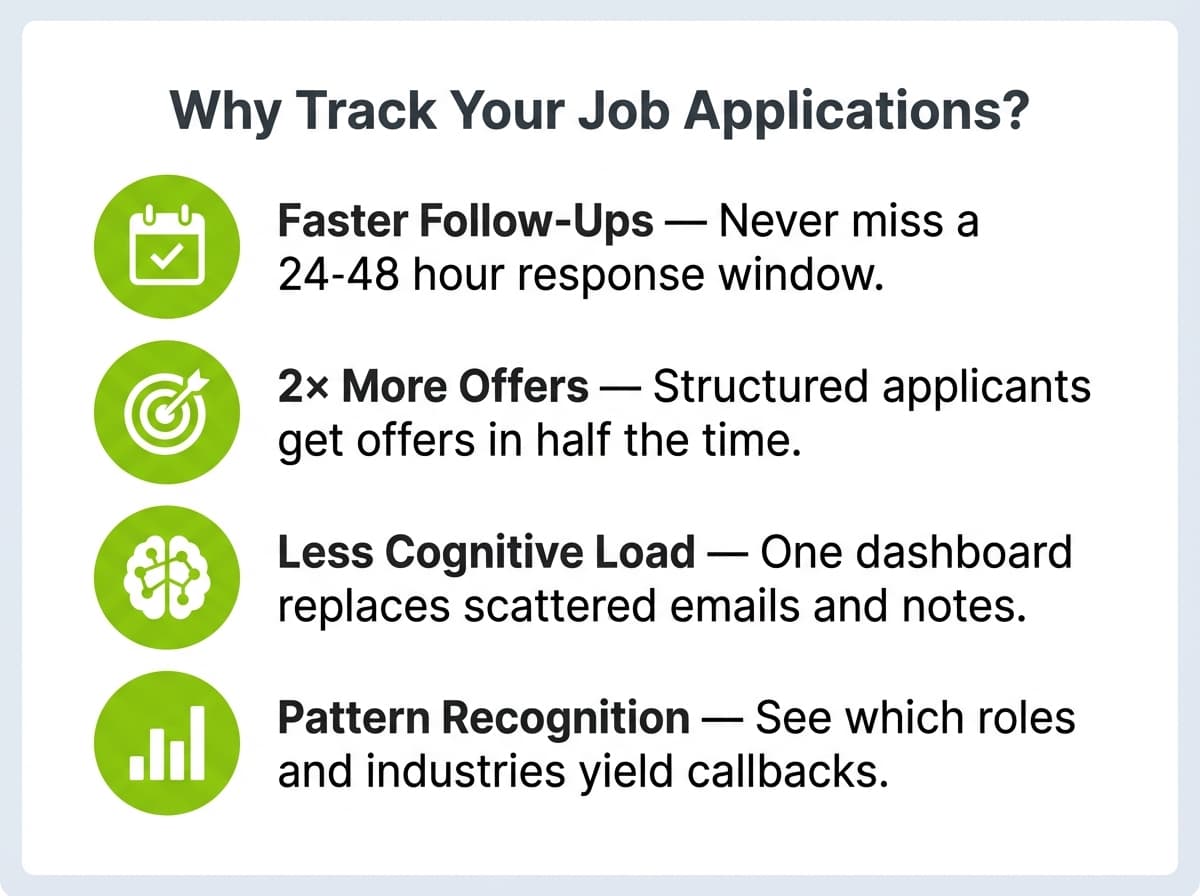
The data also supports a structured approach. Job seekers who set weekly application targets and track outcomes are 2× more likely to receive offers within 60 days than those who apply sporadically, according to LinkedIn’s 2025 Job Seeker Insights report. This is especially useful if you are making your first resume and do not yet know which roles are the best fit.
Beyond outcomes, a tracker reduces the cognitive load of job searching. Instead of scanning emails and notes to remember where you stand with a company, you check one dashboard. That clarity lets you focus energy where it matters: preparing for interviews and customizing your resume. Knowing when to lead with a resume versus a cover letter also matters, our breakdown of what hiring managers actually read first can sharpen your approach.
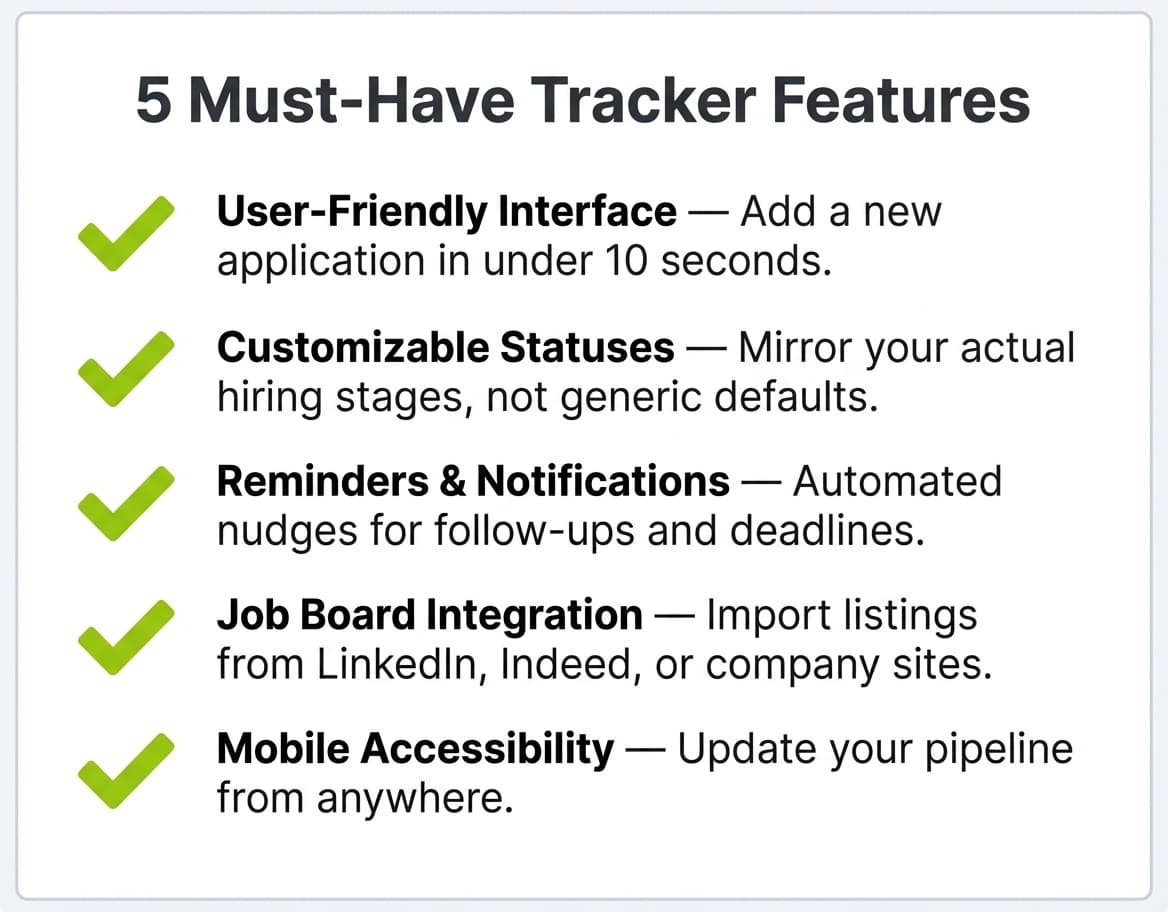
Choosing the right tracker comes down to your workflow. The features and tools below will help you find the best fit for your needs in 2026.
Furthermore, many job application trackers offer features that allow you to set reminders for follow-ups and deadlines, ensuring that you stay proactive in your search. This can be particularly beneficial when juggling multiple applications or when you have interviews lined up. By having a visual representation of your progress, you can maintain motivation and a sense of accomplishment as you check off completed applications and interviews, making the job search process feel more manageable and less overwhelming.