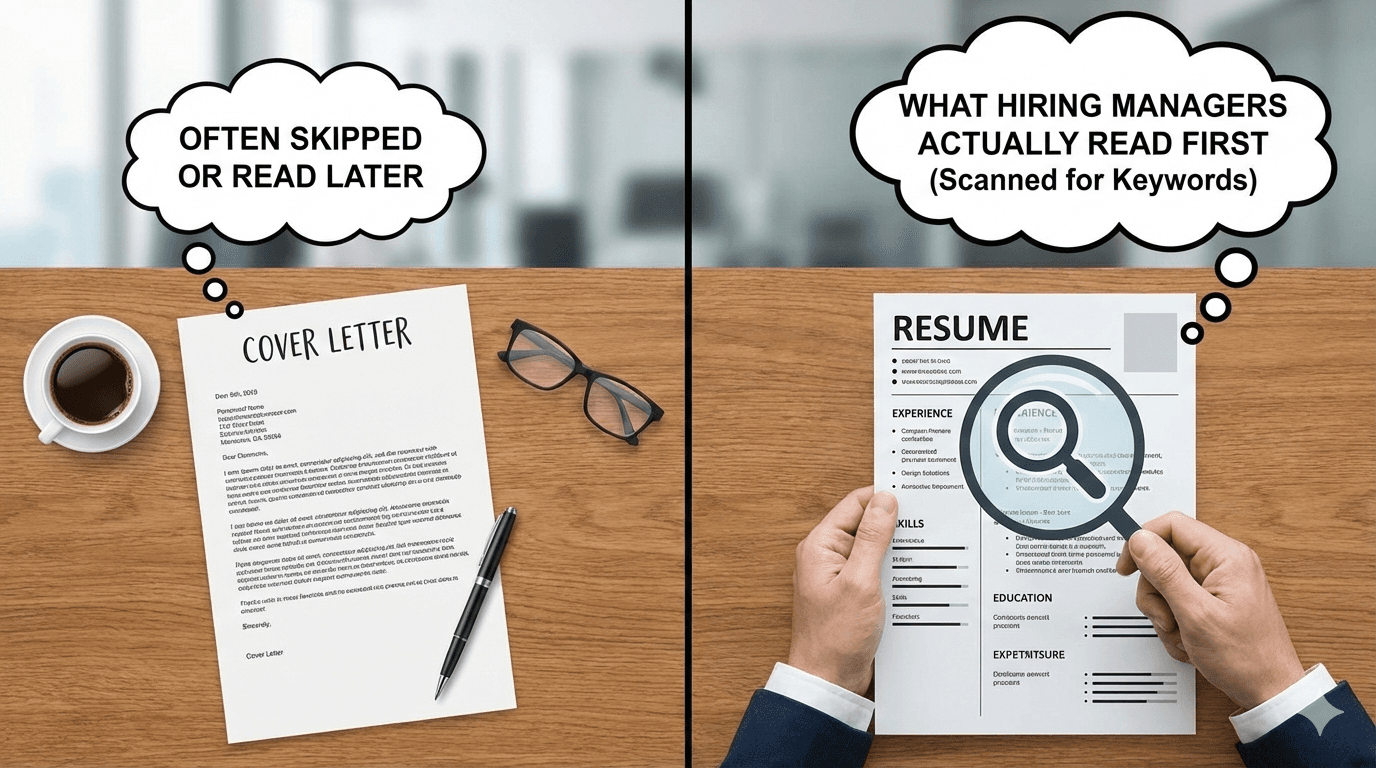
Job seekers often ask which document hiring managers read first, the cover letter or resume. My experience reviewing over 30,000 applications shows there's no universal answer. Resumes present your career achievements in a scannable format. Cover letters transform these achievements into a compelling story that aligns with your target role.
Both documents play vital yet different roles in your job application. A resume fits on one or two pages and provides a detailed overview of your work history, skills, accomplishments, and education.
A cover letter is a one-page personal introduction that explains your background and why you're the best candidate for the role. These documents work together to create a complete picture of your professional profile.
This piece explores the key differences between these documents and shows how hiring managers use them during the application process. Understanding each document's unique value will give you the tools to create standout applications that get noticed - whatever gets read first.
What Sets a Resume and Cover Letter Apart
Job seekers need to know the basic differences between resumes and cover letters to utilize both documents well. These documents work together as a powerful application package but serve different purposes to showcase your candidacy.
Purpose: Snapshot vs Storytelling
A resume works as a snapshot of your professional life, a quick overview that shows your skills, experiences, and achievements. Employers can scan this structured view of your career milestones quickly. Your cover letter brings these achievements to life and weaves them into a story that connects to your target role.
Here's a simple way to look at it: your resume shows you can do the job through measurable results and relevant skills. Your cover letter tells why you want this specific position and how your experience makes you the ideal candidate.

Tone and Language: Formal vs Conversational
The tone creates a major difference between cover letters and resumes. Resumes stay straightforward and focus on achievements with action verbs and metrics. They avoid personal pronouns and present everything in the most concise way possible.
Cover letters tell your story in a more personal way. They use a natural tone to connect with the reader. This lets you stay professional while showing who you are on a deeper level. The balance between being professional and approachable helps you connect with the company before you reach the interview.
Length and Format: Bullet Points vs Paragraphs
These documents look quite different on the page. A resume fits on 1-2 pages with focused bullet points and short phrases. Recruiters usually spend just 15-30 seconds scanning it.
Cover letters flow through 3-4 paragraphs on a single page. This format serves each document's purpose. Bullet points make your resume easy to scan. Paragraphs in your cover letter create space for stories and context that bullet points can't deliver.
Content Focus: Achievements vs Motivation
The content focus is different between these documents. Your resume displays your track record through achievements that employers can scan quickly. It answers "what have you accomplished?" with solid facts and figures.
Your cover letter explains why that track record makes you ideal for this specific job. It answers questions like why this company? and why do you want this role over others?. This comes down to a simple idea: your resume shows the "what," while your cover letter explains the why.
These core differences help you create documents that work together. You can build a strong case for your candidacy that shows both your qualifications and motivation.
When Do Hiring Managers Read Each Document?
Survey data shows an interesting divide in hiring practices—approximately 50% of hiring managers read cover letters, while the other 50% don't. Several specific factors determine which document gets attention first when comparing cover letters and resumes.
Role-Specific Priorities: Technical vs Creative Fields
The industry's nature shapes how documents get prioritized. Creative fields like communications and public relations use cover letters as critical evaluation tools. Written communication roles demand cover letters so much that missing one could cost you the job.
Technical sectors focus on verifying skills through resumes. Leadership positions follow a similar pattern—45% of recruiters will reject applications for management roles that lack cover letters, though they look at resumes first.
Company Culture Influence: Values-Driven vs Results-Driven
A company's values shape its hiring document priorities. Values-driven organizations believe cultural fit is essential, with 78% of hiring managers citing it as the top predictor of a new hire's success.
These companies find cover letters valuable because:
- They reveal personality traits that strike a chord with company values
- They show enthusiasm for the organization's mission
- They display communication style and cultural compatibility
Hiring experts say, "The secret sauce of the perfect hire is someone who is compatible both personally and professionally within the company". Many companies now share "culture decks" on career pages for applicants to reference in their cover letters.
Application Volume: High vs Low Submission Scenarios
The number of applications changes how companies approach hiring. Big corporations that receive thousands of applications usually check resumes first and often skip cover letters. 76% of hiring professionals state they prioritize resumes over cover letters for high-volume roles.