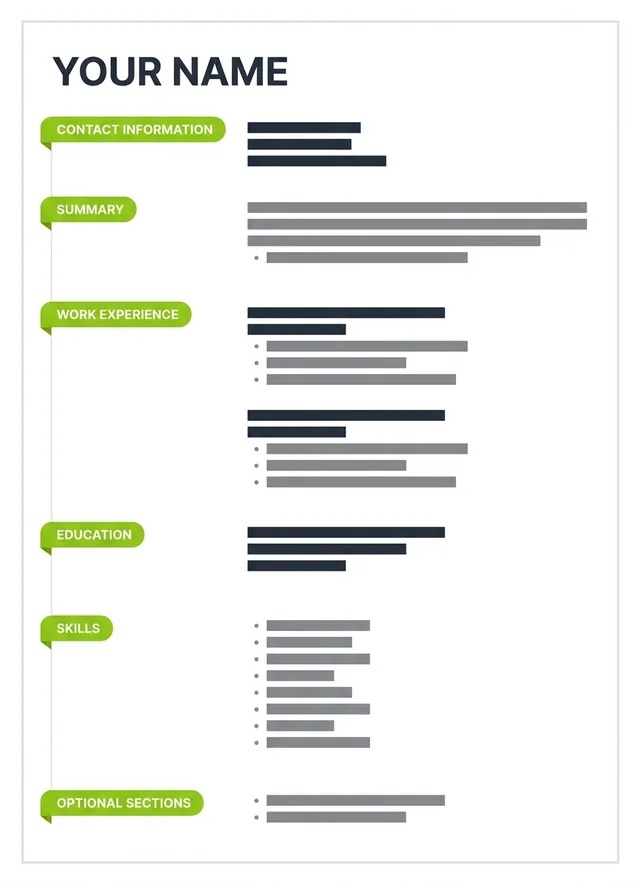
The parts of a resume are the building blocks a recruiter reads to decide, in seconds, whether you fit. Recruiters spend about 7.4 seconds on their first pass over a resume, according to a Ladders eye-tracking study reported by HR Dive, so the structure has to guide their eye to the right information fast.
This guide breaks down every section of a resume, gives you a copy-paste resume outline, and shows before-and-after examples for the sections people struggle with most. Get the skills section or the experience section wrong and a strong application can stall, so it is worth doing each one deliberately.
Whether you are building a first resume or refreshing an existing one, use the outline below as your skeleton, then fill each section with specific, quantified detail. You can also start from a resume template that already puts the sections in a recruiter-friendly order.
What are the sections of a resume?
The sections of a resume are contact information, a summary or objective, work experience, education, and skills. Those five are standard on almost every resume. Optional sections such as certifications, languages, projects, volunteer work, and awards are added only when they are relevant to the role you are targeting.
Think of the five core sections as the load-bearing structure and the optional ones as trim. A recruiter expects to find the core five in a predictable order and reads faster when they are labelled with conventional headings like Experience, Education, and Skills. Unusual labels or missing sections force the reader to hunt, which is exactly what those first seconds do not allow.
What does a resume consist of?
A resume consists of your contact details at the top, a short summary of who you are professionally, your work experience in reverse chronological order, your education, and a skills section, usually on a single page. It is a targeted marketing document, not a full life history, so every line should earn its place by supporting your case for one specific role.

![Cover Letter vs Resume: What Hiring Managers Actually Read First [2026]](/_next/image?url=%2Fapi%2Fmedia%2Ffile%2Fcoverletterandresume.png&w=1920&q=75)