Home/Blog/Blog/Student CV in Germany 2026: Lebenslauf Schüler Guide
Blog
Student CV in Germany 2026: Lebenslauf Schüler Guide
How to write a student CV (Lebenslauf für Schüler) for a German Schülerpraktikum, Ausbildung, or side job. Structure, templates, examples and formatting tips.
If you are applying for a school internship (Schülerpraktikum), an apprenticeship (Ausbildung), or your first part-time job in Germany, your CV is the document that hiring managers almost always read first. It often decides in the first few seconds whether your application gets a closer look or ends up in the rejection pile. The good news: you do not need work experience or luck to write a good one. You need a clear structure, honest content, and a few formatting rules that this guide walks you through step by step.
If you want to start straight away, you can fill and adapt a template in minutes with the CareerKit resume editor. First, though, we cover what actually belongs on the page and why.
Why your CV matters more as a student than at any later stage
At the student level, the differences between candidates are often small. Most applicants have similar grades, similar schools, and little to no work experience. That makes every detail on your CV weigh more than it would for someone with ten years of professional history behind them.
What you need it for
You need a CV for every kind of application: a mandatory school internship in the 8th, 9th, or 10th grade (a common requirement in German schools), a voluntary internship during the holidays, an apprenticeship (Ausbildung), a dual study programme (duales Studium), or a side job (Nebenjob). Indeed Germany's career guide for school internships explains that a complete German application consists of a cover letter (Anschreiben), a CV (Lebenslauf), and your current school report (Schulzeugnis). The cover letter is your personal motivation. The CV is the fact check behind it.
Submitting your own CV also signals something many students underestimate: you took the time. You did not just write "I would like an internship at your company" in an email. You put together a document that lets the reviewer make a decision in under a minute.
What recruiters scan for in the first seconds
Studies on how recruiters review applications show how little time you get on the first pass. An eye-tracking study by Ladders, reported by HR Dive, found an average of 7.4 seconds for the initial scan of a CV. In those few seconds, the reviewer is not reading the content in detail. They are checking the structure. Are your contact details complete? Do the dates make sense? Can they tell at a glance which year of school you are in and what you have done so far?
What may feel like dull formality is actually your tool to make those seven seconds work for you.
What belongs on a German student CV
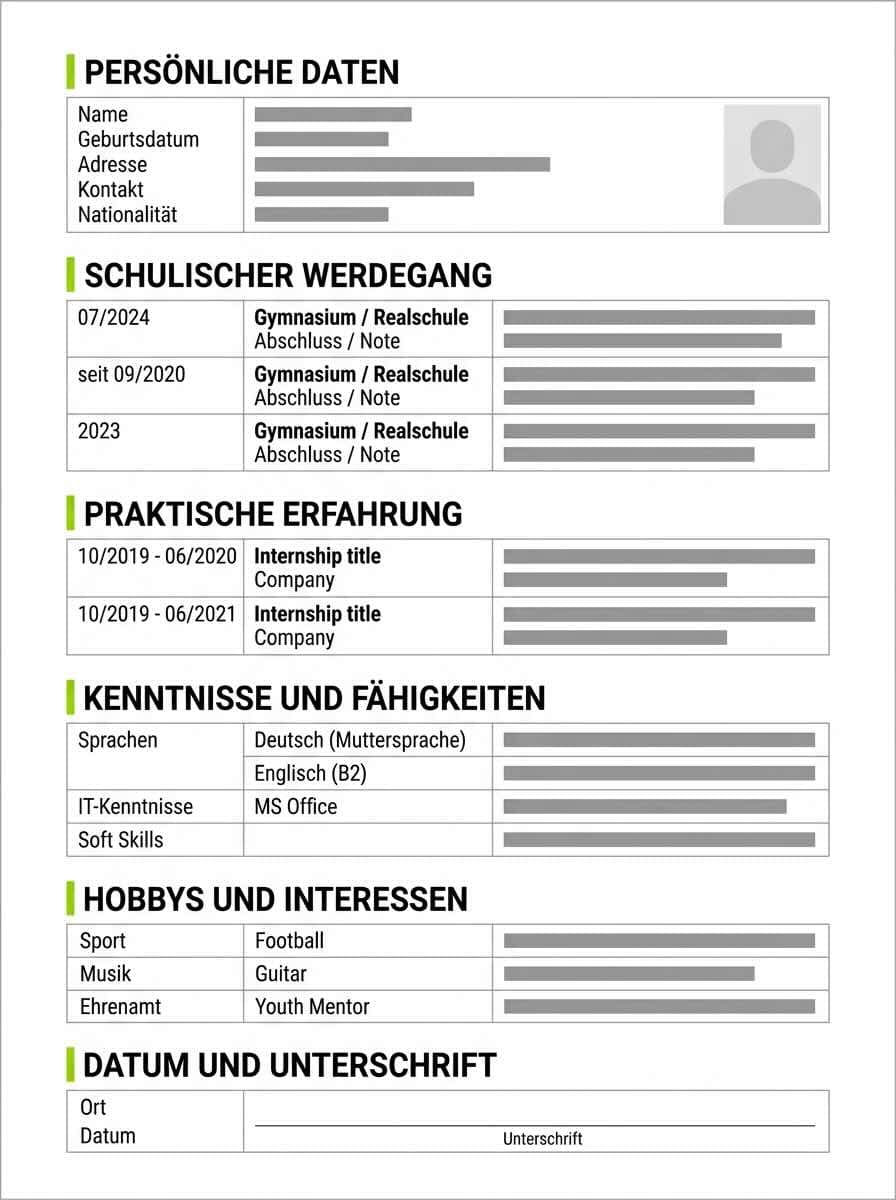
A complete student CV is built from six sections in this exact order. Deviating costs the reader time you cannot afford.
Personal information and contact (Persönliche Daten)
Start with your contact details. Mandatory: full first and last name, postal address with street, postcode, and city, a phone number, and an email address. Pay particular attention to the email. Use one that consists of your first and last name, for example "anna.berger@email.de", not "schoki_girl_2010@web.de" or "fcb4ever@gmail.com". It sounds obvious, but it is one of the most common screen-out reasons for student applications.
Optional entries are date of birth, place of birth, and a professional application photo. For student applications, these are still common in Germany, even though they have been legally optional since the German General Equal Treatment Act of 2006. Information about parents, siblings, or religion no longer belongs on a modern CV.
Here is how the block looks in practice:
Anna Berger Hauptstraße 14, 60311 Frankfurt am Main anna.berger@email.de | +49 175 1234567 Born 12.03.2009 in Frankfurt am Main
School career (Schulischer Werdegang)
List your schools in reverse chronological order, starting with your current one. For each entry, give the date range, the school name and type, the city, and either your current grade level or the completed qualification with grade.
Mention a grade only if it works in your favour. A German grade point average of 2.7 or better (where 1.0 is the highest possible) is a good rule of thumb. If your average is lower, leave it off and let your other strengths do the work. Advanced courses (Leistungskurse), favourite subjects, or a relevant school project round out the section, especially when they connect to the internship you are applying for.
A school entry that aligns well with the role looks like this:
Since 09/2020 Goethe-Gymnasium, Frankfurt am Main Expected qualification: Abitur (06/2027) Advanced courses: Biology and English Current project: Jugend forscht competition 2025, topic "Water analysis in urban water bodies"
Practical experience and side jobs (Praktische Erfahrung)
This section covers everything you have done outside school that touches the working world. School internships, voluntary internships, holiday jobs, babysitting, tutoring, volunteer work, and even school projects with a real practical component all belong here.
If you have never done an internship, that is completely fine. That is precisely why you are applying now. The Federal Employment Agency (Bundesagentur für Arbeit) confirms in its teaching materials for schools that at this stage applicants are expected to demonstrate willingness to learn and genuine interest, not career experience.
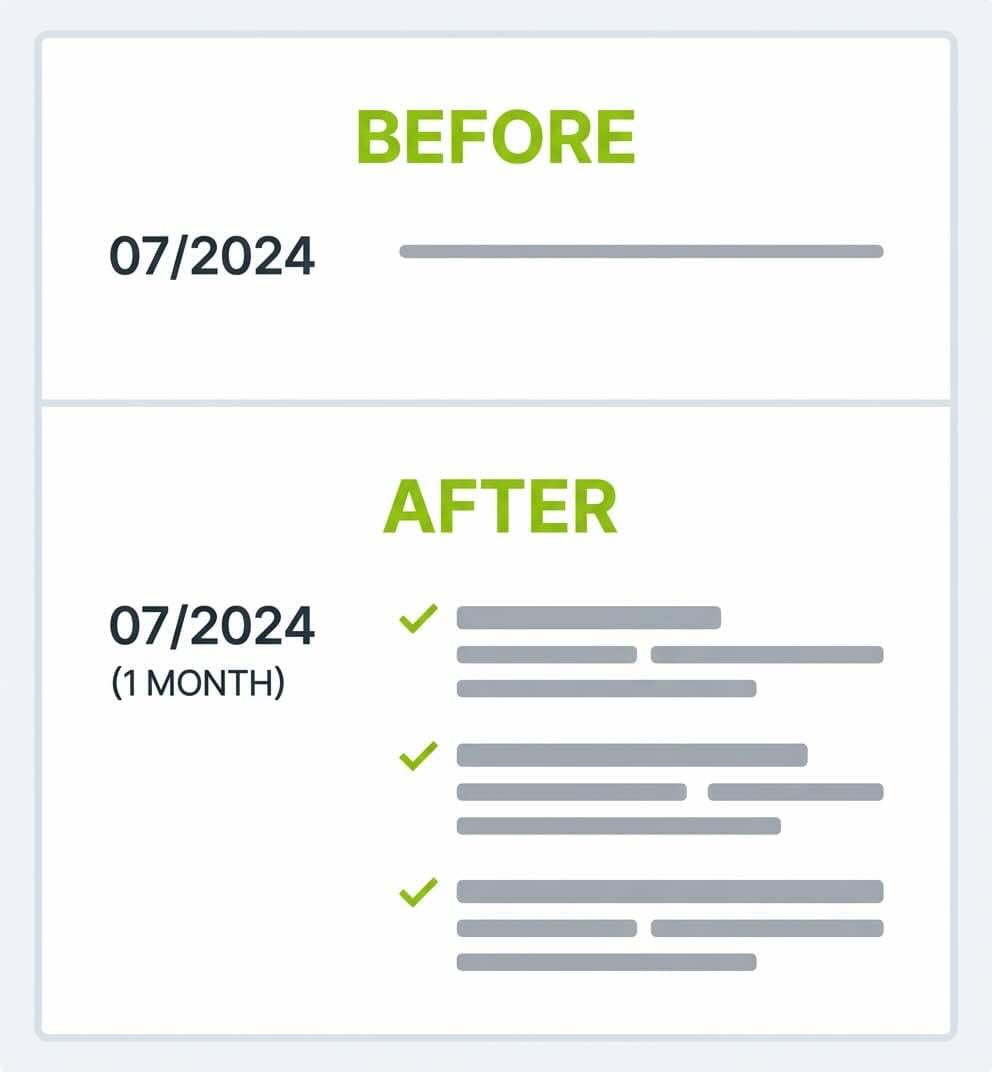
If you do have experience, describe it concretely. Here is what a weak entry looks like:
07/2024 Internship at a pharmacy
And here is the same entry made specific:
07/2024 (2 weeks) School internship, Adler-Apotheke, Frankfurt am Main Assisted with sorting and shelving medication deliveries Observed customer consultations at the sales counter Independent research on active ingredients for a school presentation
Ready to put this into a real resume?
Write it here for free. Paste the job posting and the editor shows you which of its terms your draft is missing.
Skills and competencies (Kenntnisse und Fähigkeiten)
This is where you show what you can do outside the classroom. Split the section into languages, computer skills, and other relevant skills. Be honest and avoid exaggeration. If a follow-up interview reveals that your "advanced Excel skills" stop at the SUM function, the credibility loss is bigger than a modest CV would have been.
A precise skills section for a student reads like this:
Languages: German (native), English (B2), French (basic, since 7th grade) IT skills: Microsoft Word and PowerPoint (proficient), Excel (basic), Canva (regularly used for school projects) Other: First aid certificate (08/2024), silver swimming badge
If you are short on the right vocabulary, the CareerKit skills generator can suggest appropriate terms you can adapt.
Hobbies and interests (Hobbys und Interessen)
This section is optional but almost always a good idea for students. Since you have little work experience, hobbies are your chance to show personality and soft skills. The key is detail, not just labels.
Avoid generic entries like "sports" or "music" and passive hobbies like "watching films", "social media", or "gaming". Almost everyone writes these and they tell the reader nothing. Team sports demonstrate teamwork. Playing in a band or orchestra shows discipline. Volunteer activities signal social engagement and stand out positively to recruiters.
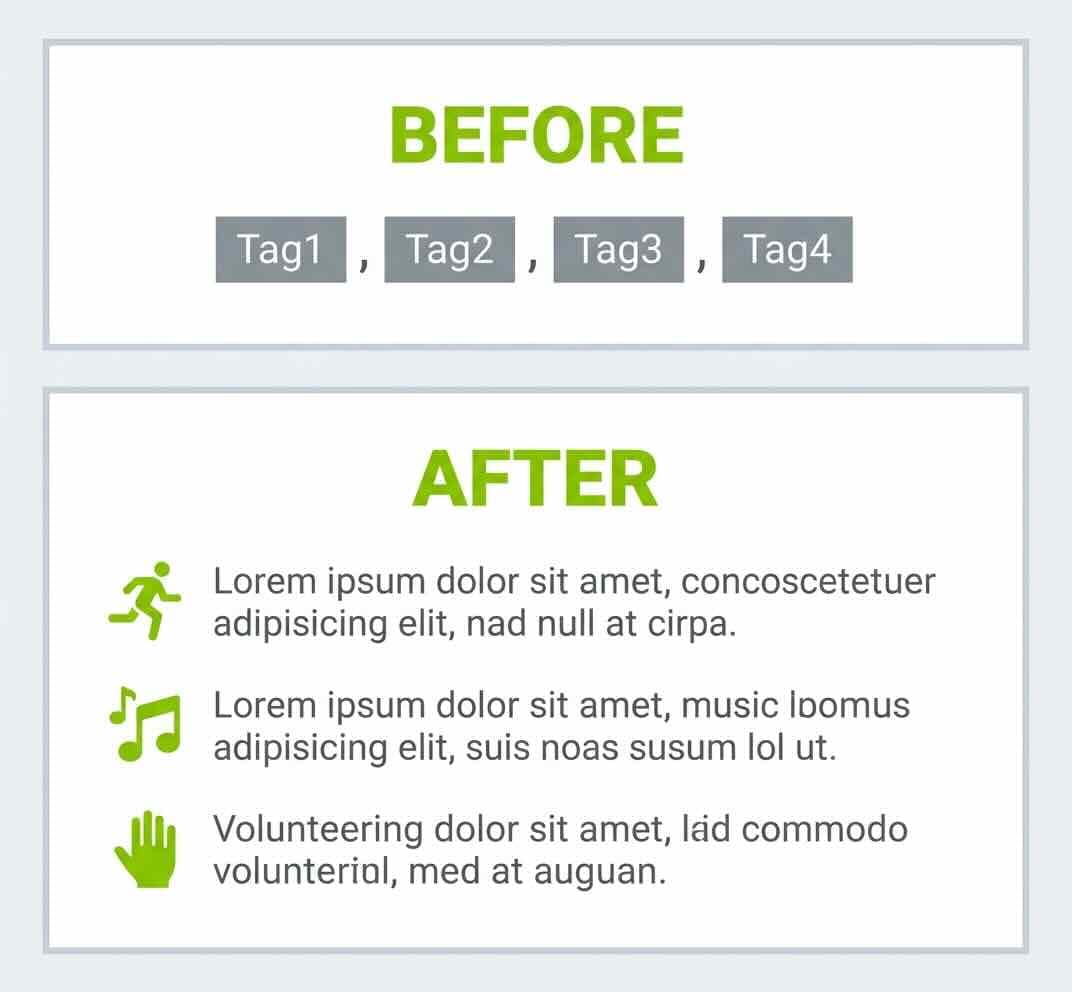
Here is a weak hobbies block:
Hobbies: sports, music, reading, meeting friends
And here is the same block turned into a small personality portrait:
Handball (TV Frankfurt, 7 years, currently in the U16 team) Clarinet (Musikschule Frankfurt, member of the school orchestra) Volunteer: reading mentor for first-graders at Berger Straße primary school
Date and signature (Datum und Unterschrift)
Close with the city you are writing from, the current date, and your signature. For a printed application, sign by hand. For a digital application, photograph your signature with your phone and insert it as an image, or sign with a tablet. Avoid using a typed cursive font, which looks cheap.
Step by step to a finished CV
If you have never written a CV before, getting started can feel intimidating. The next three steps take you from a blank page to a finished document.
Step 1: Choose the right template
A good template saves hours because you can focus on content instead of layout tinkering. For a student application, simple single-column templates with dates on the left and content on the right work best. Avoid sidebar layouts with a narrow extra column for skills or hobbies, because larger employers often run applications through automated screening tools that misread parallel columns. If you are applying to a bank, a law firm, or the public sector, keep colour conservative too. If you are applying to an ad agency, an architecture firm, or a tech company, the layout can lean more modern typographically while staying structurally simple.
A free and official option is the Europass CV editor, which the European Union offers ad-free in 31 languages with four template choices. A fuller breakdown of each section a CV can contain is in the anatomy of a resume guide.
Step 2: Fill in the content section by section
Work through the six sections in order. Start with your contact details because they are the easiest, then move on to your school history. Leave harder sections like internships or hobbies for later, when you already have momentum. If you struggle on the work experience block, that is normal. You are writing your first or second entry there. Focus on what you learned, not how impressive the task sounds.
Once all the content is in, review the overall look. Is the font consistent? Are line spacings even? Does everything fit on one page? Are there empty patches that look unfinished? Read the document twice: once for content, once just for visual consistency. Print it as a final check, because formatting breaks are often easier to spot on paper than on screen.
Before you send it, save the file as a PDF. This locks the layout so it looks the same on every recipient's screen, regardless of which software they use. If you are still unsure whether your first version holds up, the first-resume guide walks through a complete checklist.
Formatting that looks professional
Whether your CV works often depends on what happens before the first word is read. Recruiters absorb visual quality in a fraction of a second, long before they parse any content.
Fonts and sizes
Pick a clean, readable font like Arial, Calibri, Helvetica, or Times New Roman. Indeed Germany's career guide for school internships recommends 11 to 12 pt for body text. Headings can run 13 to 14 pt without looking shouty. Stick to one font for the whole document, and use the same one for your cover letter so the application reads as a single, considered package.
If you are unsure which font sits best with your layout, you can compare options side by side in the CareerKit font preview tool before committing.
Margins, line spacing, and layout
For margins, follow DIN 5008, the German formatting standard, as ausbildung.de explains for student internship CVs: 2.5 centimetres on the left, 2 centimetres on the right, 4 to 4.5 centimetres on top, and 2 to 2.5 centimetres on the bottom. These are not legally mandatory but they produce the calm, professional layout German recruiters expect.
Line spacing between 1.0 and 1.15 keeps the page legible without gaps. Hold the CV to a single A4 page, because Stuzubi's student internship guide correctly notes that teenagers simply do not have as many stations as adult applicants. A half-empty second page looks unstructured.
Common mistakes to avoid
Three mistakes show up on nearly every second student CV. Mixed fonts or font sizes in the same block look unprofessional and usually slip in when you copy from old templates. Inconsistent bullet markers, sometimes dots, sometimes dashes, are spotted instantly and take ten seconds to fix.
Typos in contact details are particularly costly, because they not only look careless but can also lose you the interview. Check your phone number, email address, and postcode twice. One useful final question before you send: would you invite yourself to interview if you received this application from someone else?
When you are ready, you can build the full layout and all six sections in the CareerKit resume editor and fill it step by step.
Conclusion
A solid student CV is not rocket science. You need a clear six-section structure, honest content with specific details, and clean formatting. You can learn this in two or three hours and apply it in roughly an hour per application.
What recruiters want is not the flawless career of a 16-year-old. They want to see that you took the time, that you can present yourself carefully, and that you are genuinely interested. Every CV that follows this guide shows exactly that.
A single A4 page is enough in almost every case. As a student, you do not yet have many stations to list, and recruiters do not expect them. Focus on the essentials: personal information, school history, practical experience, skills, hobbies, and signature. A half-empty second page looks unstructured and should be avoided.
A photo has not been legally required in Germany since 2006, but student applications still commonly include one because it makes the CV feel more personal. If you decide to include a photo, it should look professional, not a selfie from the bathroom mirror. If you do not have a good photo, leave it off rather than use a poor one.
Use a clean font like Arial, Calibri, Helvetica, or Times New Roman at 11 to 12 pt for body text. Headings can run 13 to 14 pt. Stick to one font throughout the document and use the same one for your cover letter, so the entire application reads as a single, considered package.
Reverse chronological order means you list the most recent entry first within each section and then work backwards. If you are currently in 10th grade and switched schools before, your current school appears at the top. For practical experience, your most recent internship comes first and your earliest one last.
Choose hobbies that reveal personality and soft skills. Team sports demonstrate teamwork, playing in a music group shows discipline, and volunteer activities signal social engagement. Add details like "Handball, TV Frankfurt, 7 years" rather than just "sports". Avoid passive activities like watching TV, gaming, or social media, because they give the reviewer no picture of you.
In most cases, yes. A complete application consists of a cover letter (Anschreiben), a CV, and your current school report. The cover letter explains why you are applying to this specific company, while the CV provides the facts behind it. Both documents should use the same font and the same margins so they look like one consistent application.
Student CV in Germany: section-by-section breakdown
Section
Required or optional
What goes in
Typical length
Personal information
Required
Name, address, phone, email; optional date of birth and photo
4 to 6 lines
School career
Required
Current and previous schools with date range, city, and qualification
2 to 4 entries
Practical experience
Optional but recommended
Internships, holiday jobs, side jobs, volunteer work
1 to 4 entries
Skills and competencies
Required
Languages (with CEFR level), computer skills, certificates
3 to 6 lines
Hobbies and interests
Optional but recommended
Club memberships, volunteer roles, hobbies with specific details
3 to 5 entries
Date and signature
Optional
City, current date, handwritten or scanned signature
2 lines
About the author: Nishant Modi is the founder of CareerKit and helps applicants across the DACH region make their job applications visible and convincing. He lives and works in Zurich.
Put this advice to work
You just read the theory. Write the resume itself here: free, unlimited, and yours to download as PDF or Word.
Nishant Modi is the founder of Careerkit.me and a product builder based in Zürich, Switzerland. With a background in product management, marketing & management consulting, he transitioned into AI entrepreneurship after experiencing the frustration of outdated job search tools firsthand. He built Careerkit to give every job seeker access to professional grade resume tools, the platform has helped over 10,000 candidates create ATS optimized resumes. He writes about resume strategy, hiring trends, and what actually gets people hired.





![Cover Letter vs Resume: What Hiring Managers Actually Read First [2026]](/_next/image?url=%2Fapi%2Fmedia%2Ffile%2Fcoverletterandresume.png&w=1920&q=75)