Your resume objective can determine whether a recruiter reads the rest of your application or moves on. According to a Ladders eye-tracking study, recruiters spend roughly six to seven seconds scanning a resume before making a fit-or-pass decision. In that narrow window, a sharp objective signals you belong in the "yes" pile. Even more striking, Jobscan's analysis of over one million applications found that candidates whose resumes matched the exact job title were 10.6 times more likely to land an interview.
5 resume tips that actually get you interviews
This guide provides 52 resume objective examples across industries and career stages, plus a step-by-step framework for writing your own. Whether you are a recent graduate, a career changer, or re-entering the workforce, you will find objectives you can adapt to capture attention and secure callbacks in 2026.
If you already have relevant experience, a resume summary often works better than an objective. See our resume summary examples and the full comparison of resume objectives vs. summaries to decide which one fits your situation.
What Is a Resume Objective Statement?
A resume objective is more than a formality at the top of the page. When written well, it frames your candidacy for the reader and gives them a reason to keep going. Here is what you need to know about how objectives work, how they differ from summaries, and when to use one.
Definition and Purpose
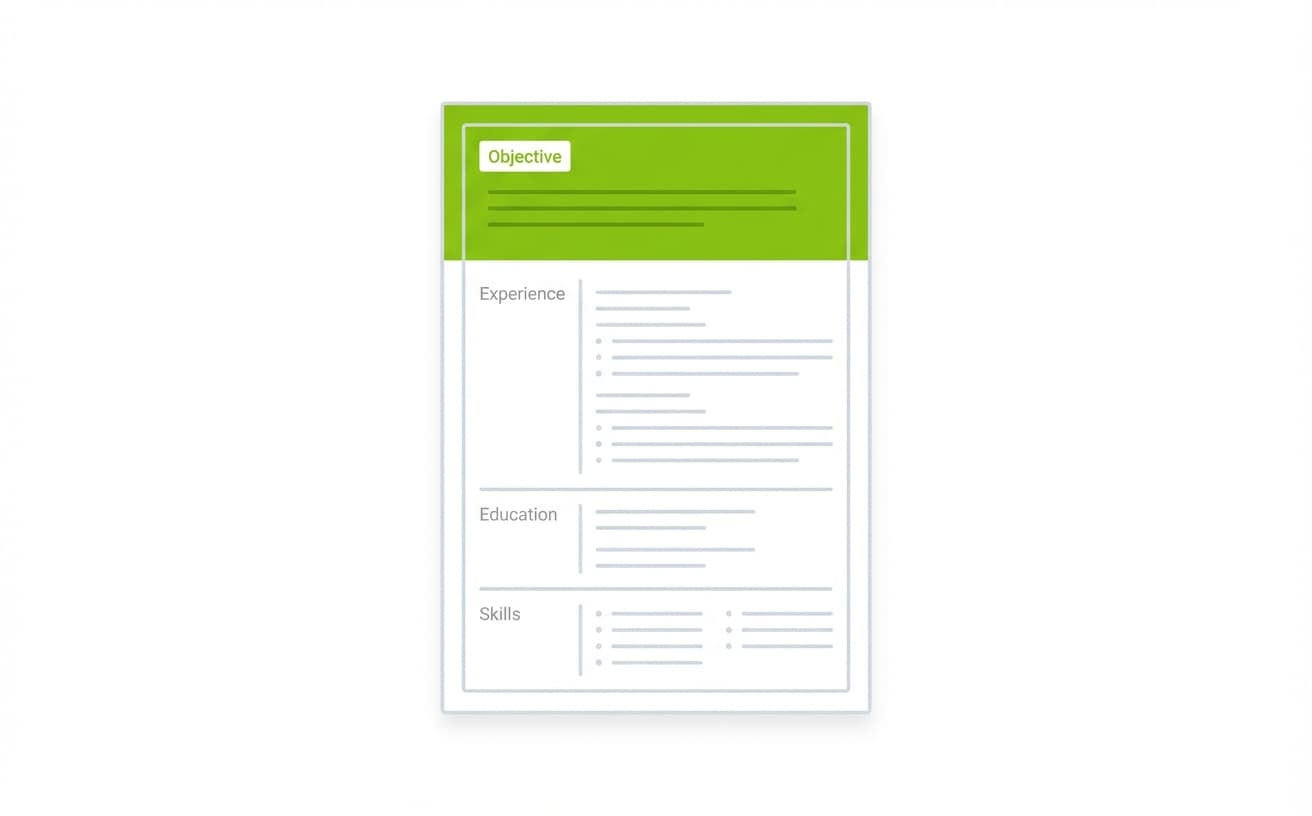
A resume objective is a one- to two-sentence statement at the top of your resume that explains why you are applying for a particular role. It typically runs 30 to 50 words and serves a specific purpose: directing the reader's attention toward your relevant skills and the value you bring to the employer. According to Indeed's career guide, a well-written objective helps the hiring manager understand your fit before they even reach your work history.
An objective is especially useful when your background does not speak for itself. If you hold a degree in accounting but you are applying for an operations role, for example, your objective is where you explain that pivot. Without it, the recruiter is left to guess why you applied, and most will not bother guessing.
Resume Objective vs Resume Summary
Objectives and summaries sit in the same spot on a resume but serve different audiences. An objective looks forward: it states what you want to achieve and which transferable skills you bring. A summary looks backward: it highlights measurable accomplishments from your career history.
Here is the practical difference:
Objective (forward-looking): "Detail-oriented marketing graduate seeking an entry-level social media coordinator role at Acme Corp to apply content strategy skills developed during a 6-month internship managing three brand accounts."
Summary (backward-looking): "Digital marketer with 5+ years of experience who grew organic social engagement by 47% and generated $125K in attributable revenue through multi-channel campaigns."
Objectives use personal language to show motivation and direction. Summaries use metrics to prove past performance. If you have fewer than two to three years of experience, an objective is almost always the better choice because you do not have enough data to build a compelling summary.
When Resume Objectives Are Most Effective
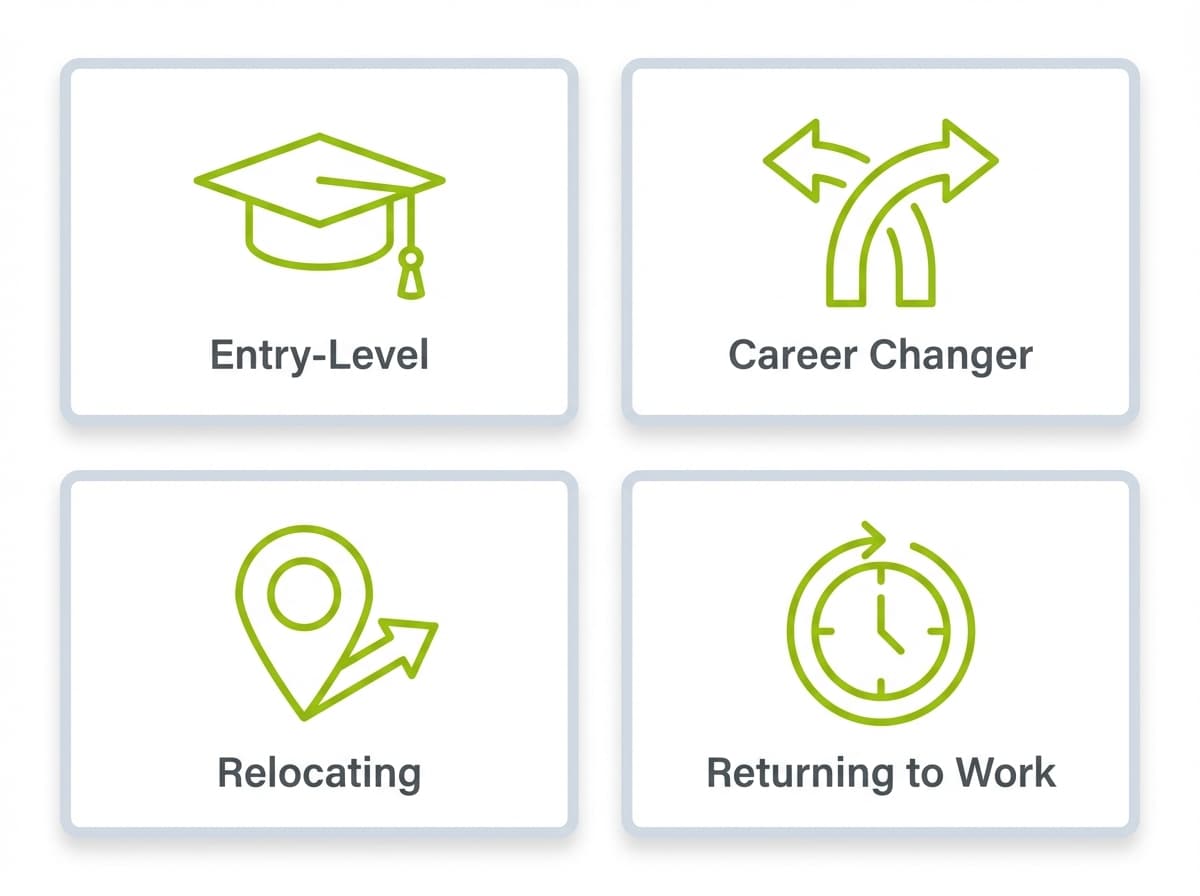
Resume objectives work best for specific candidate profiles. Coursera's career advice center identifies entry-level candidates with zero to two years of experience, career changers transitioning between industries, recent graduates, and professionals returning after extended gaps as the groups that benefit most. Certain sectors, including government agencies, academic institutions, and nonprofits, also tend to favor objectives over summaries.
If you are a mid-career professional with a strong track record in the same field, a summary will serve you better. But if your story needs context, an objective does the contextualizing for you.
When Should You Include an Objective on Your Resume?
Not every resume needs an objective. Including one when it is unnecessary can actually work against you by taking up valuable space. Four specific scenarios call for an objective statement, and understanding which one applies to you will help you decide.
Entry-Level Job Seekers
Students and professionals with limited industry experience face a core challenge: they must communicate both skill set and character when practical achievements are sparse. An objective provides the framing you need when your work history section is thin. Rather than hoping a recruiter infers your potential from a list of coursework, you tell them directly what role you are targeting and which transferable skills you bring. If you are building your first resume, an objective gives your application a clear sense of direction that the rest of the document may lack.
Career Changers
Career pivots require clarity upfront. When your previous experience sits in a different industry, a hiring manager may wonder why you applied at all. An objective bridges the gap between where you have been and where you want to go. It reframes your background as relevant preparation rather than an unrelated detour, shifting the recruiter's focus from past job titles to the transferable strengths you bring. If you are navigating a career transition, pairing your objective with a purpose-built format like a career change resume template makes the case even stronger.
Relocating Professionals
Applying from another city or country introduces a real concern: will this candidate actually show up? According to Indeed's research, the share of job seekers willing to relocate for a role has declined in recent years. Stating your relocation intent directly in the objective removes uncertainty and positions your willingness to move as an asset, especially for employers seeking in-office staff.
Returning to Work After a Gap
Career breaks have become more common, and LinkedIn introduced a dedicated "Career Break" feature to normalize non-linear paths. Still, a gap on your resume invites assumptions. An objective keeps hiring managers from guessing by providing context upfront, whether you stepped away for caregiving, health, education, or personal reasons. It re-anchors your narrative around what you can do now rather than what you were not doing then.
How to Write a Good Objective for Resume in 2026
Writing a strong resume objective is not about stringing together buzzwords. It is about positioning yourself as the answer to a specific employer's need in under 50 words. Here are the five elements that make an objective work.
Start with Your Current Status
Open by describing who you are right now. A title or descriptor paired with one or two of your strongest qualities sets the stage. Compare these two openings:
Weak: "Hardworking individual looking for a new opportunity."
Strong: "Analytical finance graduate with hands-on experience in portfolio modeling and risk assessment."
The second version tells the reader exactly what kind of candidate they are dealing with before they even reach the verb. Establish credibility first, then state what you want.
Mention the Specific Role You Are Targeting
Generic objectives fail because they suggest you did not take the time to understand the role. Naming the specific position you are pursuing does two things: it shows genuine interest, and it helps your resume pass applicant tracking systems that filter by job title. Remember, Jobscan's data shows that matching the exact job title increases your interview odds by more than ten times.
Highlight Relevant Skills and Experience
Focus on transferable competencies that apply to your target role. If you are moving from hospitality to sales, "client relationship management" and "revenue growth strategies" translate directly. If you are a recent graduate, highlight specific coursework, certifications, or project outcomes that prove you can contribute from day one. Use CareerKit's skills generator to identify the highest-impact skills for your target role.
Measure Your Achievements When Possible
Numbers prove results. Even without exact figures, you can quantify using ranges, frequencies, or percentages. Compare:
Before: "Helped improve team productivity."
After: "Streamlined scheduling processes for a 15-person team, reducing missed deadlines by approximately 25%."
Hiring managers scan for metrics because they demonstrate that you understand work should produce measurable outcomes. According to SHRM's hiring research, resumes with quantified achievements consistently outperform those with vague descriptions.
Tailor It to Each Job Application
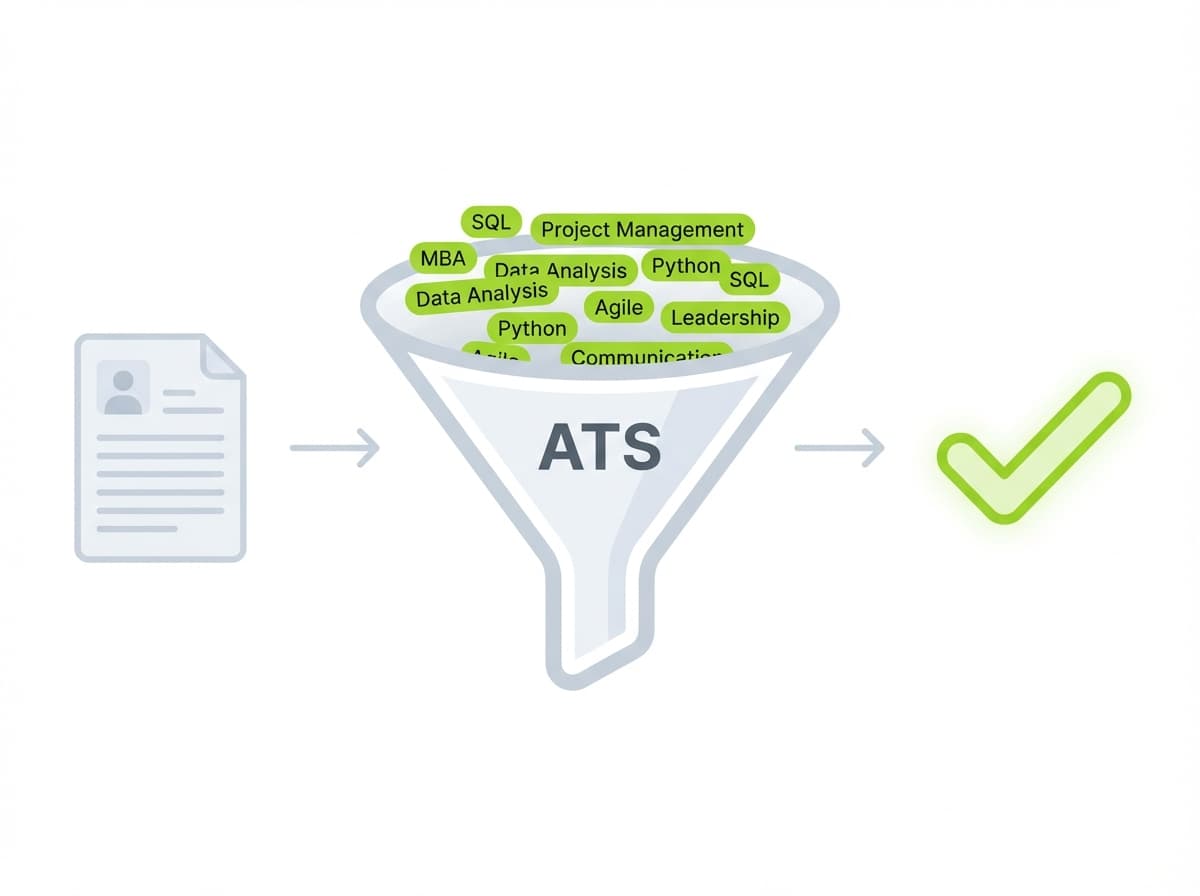
Your objective needs customization for every position. Pull keywords directly from the job description, mirror the employer's language, and prioritize their stated needs. This is not optional: Indeed's resume guidance emphasizes that applicant tracking systems filter resumes using exact terms from the posting. A generic objective that could apply to any company will be treated as exactly that.
Ready to put this framework into practice? CareerKit's resume builder lets you customize your objective for each application and preview how it looks in a clean, ATS-friendly format.
Common Mistakes to Avoid in Resume Objective Examples
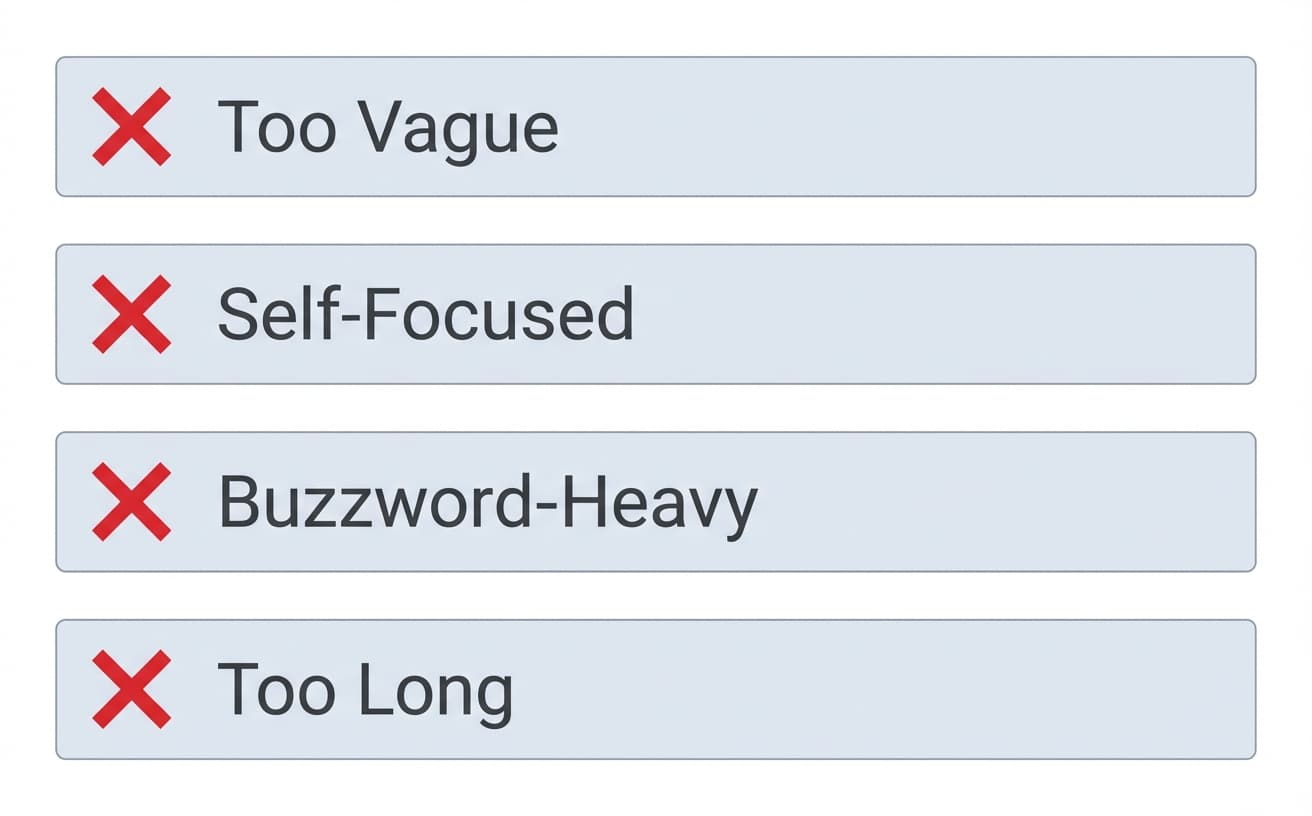
Objective mistakes eliminate candidates before hiring managers read a single bullet point. Knowing what weakens your statement is just as important as knowing what strengthens it.
Being Too Vague or Generic
Statements like "Looking for a challenging role at a good company" communicate nothing useful. They signal mass-applying rather than genuine interest. According to Zippia's resume research, approximately 36% of resumes are rejected for being too generic. Customize your objective for each position, making it speak directly to the company and role.
Generic: "Seeking a position where I can grow my skills and contribute to a great team."
Specific: "Seeking a junior data analyst role at DataCorp where I can apply my Python and SQL proficiency to support the customer insights team."
Focusing on What You Want Instead of What You Offer
An objective that reads "Seeking an entry-level position to build my skills in marketing and learn from industry experts" centers entirely on what you get out of the deal. Hiring managers want to know what you bring. Frame your goals around how your skills contribute to their team, not around what you hope to extract from the experience.
Self-focused: "Looking for an opportunity to develop my project management abilities."
Employer-focused: "Project coordinator with Agile certification seeking to apply structured planning and stakeholder communication skills to accelerate product delivery at [Company]."
Using Overused Buzzwords
Terms like "hardworking," "team player," "detail-oriented," and "self-starter" describe traits without providing evidence. Indeed's career advice flags these as words that make resumes blend into the pile. Instead of calling yourself "results-driven," show a result. Instead of "detail-oriented," mention the specific process you improved through careful attention.
Making It Too Long
Your objective should be one to three sentences, roughly 30 to 50 words. Anything longer turns the objective into a summary paragraph and loses the punch that makes it effective. If you find yourself writing a fourth sentence, you are including information that belongs in your work experience section instead.
Entry-Level Resume Objective Examples
Entry-level positions span a wide range of industries and educational backgrounds. Each career stage within entry-level work demands specific framing to address employer concerns about inexperience and highlight readiness to contribute.
Recent Graduates
Fresh degree holders should reference academic achievements and specific programs completed:
"Business Administration graduate with a specialization in operational efficiency and four years of applied academic projects, seeking an operations coordinator role at [Company] to streamline internal workflows."
"Recent finance graduate with a bachelor's degree and internship experience in investment analysis, looking to apply quantitative modeling skills to support portfolio management at [Company]."
Degree-specific language establishes credibility when work history remains limited.
First-Time Job Seekers
Without formal degrees or extensive work history, emphasize skill readiness and learning capacity:
"Motivated high school graduate with three months of administrative experience and strong proficiency in Microsoft Office, seeking an administrative assistant role at [Company] to support daily operations and document management."
"Dependable and organized student with strong communication skills, seeking a part-time retail sales associate position at [Store] to deliver excellent customer experiences."
Internship Candidates
Internship objectives balance academic preparation with eagerness to gain practical exposure:
"Civil engineering student with a solid foundation in project management and CAD software, seeking a summer internship at [Firm] to contribute to site planning and structural analysis."
"Communications major with bylined articles in the campus newspaper, looking for a journalism internship focused on political coverage to develop reporting skills under deadline pressure."
Career Starters
Entry-level professionals with minimal experience should quantify any achievements they have:
"Entry-level marketing professional with Google Analytics certification and a personal blog generating 2,000 monthly visitors, seeking a full-time content coordinator role to create data-informed social media strategies."
Career Change Resume Objective Examples
Career changers showcase transferable competencies through objectives that reframe past experience as relevant preparation. The challenge lies in connecting backgrounds that seem unrelated while addressing potential employer skepticism.
Transitioning Industries
State your transition explicitly while emphasizing applicable experience:
"Accounting professional with ten years of experience managing finances for mid-size organizations, seeking a financial operations role in state government to apply budgeting expertise and regulatory compliance knowledge to public service."
"Marketing communications leader with a decade of campaign management experience, transitioning to nonprofit development to apply donor engagement and storytelling skills toward community impact."
Leveraging Transferable Skills
Ready to put this into a real resume?
Write it here for free. Paste the job posting and the editor shows you which of its terms your draft is missing.
Cross-functional abilities prove your readiness despite industry differences:
"Retail manager with three years of experience leading a team of twelve and resolving 200+ customer inquiries weekly, seeking an inside sales representative role at [Company] to apply negotiation, communication, and CRM skills to revenue growth."
Pivoting to a New Field
Complete field shifts need specificity about your new direction:
"Content writer with six years of SEO experience and a track record of producing ten articles per week ahead of deadline, seeking to transition into social media management to apply editorial planning and audience engagement skills at [Company]."
Professional Reinvention
Major transformations benefit from emphasizing leadership growth:
"Experienced sous chef with a strong track record in kitchen operations, food quality, and team training, seeking a restaurant manager role at [Restaurant] to apply organizational, leadership, and customer satisfaction skills to front-of-house operations."
Career Advancement Resume Objective Examples
When you want to move up within your current field, your objective needs to demonstrate progression, not change. These examples show how to signal readiness for the next level.
Seeking Promotion
Internal advancement objectives highlight company knowledge and tenure:
"Dedicated project coordinator with eight years at [Company] and a commitment to quality service delivery, seeking a promotion to residential project manager to lead cross-functional teams and oversee client-facing operations."
Moving to Management
First-time managers should demonstrate leadership readiness:
"Marketing specialist with five years of campaign execution experience and a record of mentoring three junior team members, seeking a team leader role at [Company] to apply strategic planning and people development skills to department growth."
"General manager with twelve years in manufacturing operations, seeking a director-level role to apply lean management, process improvement, and P&L oversight skills to a growing organization's operational strategy."
Leadership Roles
Executive-level objectives focus on organizational impact:
"Operations executive with a fifteen-year track record of scaling teams from 20 to 200+ employees and driving $15M in annual revenue growth, seeking a Chief Operating Officer position with a company poised for national expansion."
Healthcare resume objectives must demonstrate clinical competencies alongside the interpersonal strengths that affect patient outcomes. Each healthcare role requires a tailored approach.
Nursing Objectives
Nursing objectives vary by experience level and specialty:
Entry-level: "Compassionate BSN graduate with clinical rotations in pediatric and acute care settings, seeking a registered nurse position at [Hospital] to deliver evidence-based patient care."
Experienced: "Patient-focused RN with four years of acute care experience and a 98% patient satisfaction rating, seeking a hospice nurse position at [Organization] to provide compassionate end-of-life care."
Career transition: "Emergency department RN with three years of high-acuity experience, seeking a nurse educator role at [Institution] to apply clinical expertise and mentoring skills to new graduate training."
Medical Assistant Objectives
Medical assistant objectives should highlight both clinical and administrative capabilities:
"Certified medical assistant with two years of experience managing patient intake, vital signs, and EHR documentation, seeking a position at [Practice] to support physician workflows and improve patient throughput."
Healthcare Administration Objectives
Healthcare administrators emphasize leadership and operational expertise:
"Healthcare administrator with an MBA in healthcare management and six years of experience leading hospital department operations, seeking a director role at [Organization] to apply data analysis, staff development, and process improvement skills to patient care delivery."
Industry-Specific Objective in Resume Examples: Technology
Technology sector objectives require both technical proficiency and problem-solving capabilities. Reference specific languages, certifications, and quantified project outcomes.
Software Developer Objectives
"Full-stack developer with three years of experience building React and Node.js applications, seeking a software engineer role at [Company] to contribute to product development and reduce deployment times."
"Computer science graduate with proficiency in Python, Java, and AWS, seeking an entry-level software engineering position at [Company] to apply troubleshooting and systems integration skills to cloud infrastructure projects."
Data Analyst Objectives
"Data analyst with five years of experience in SQL, Python, and Tableau who increased reporting efficiency by 30% at a Fortune 500 company, seeking a senior analyst role at [Company] to drive strategic business decisions through data visualization."
IT Professional Objectives
"CCNP- and MCSE-certified IT specialist with over five years of experience in network administration and incident response, seeking a senior IT role at [Company] to improve infrastructure reliability and reduce downtime."
Cybersecurity Objectives
"Cybersecurity professional with twelve years of IT experience and a strong background in audit, compliance, and SIEM tools, seeking a position focused on intrusion detection and threat analysis at [Company]."
Industry-Specific Career Objective Examples: Business and Finance
Business and finance objectives must establish credibility through specific credentials while proving analytical capabilities with measurable results.
Accountant Objectives
Entry-level: "Detail-oriented accounting graduate with proficiency in preparing balance sheets, financial statements, and reconciliation reports, seeking an entry-level staff accountant position at [Firm]."
Mid-level: "Licensed CPA with four years of tax accounting experience, seeking a management position at [Firm] to apply deep knowledge of federal and state tax codes and lead a team of five associates."
Senior: "CPA with three years of supervisory experience and a track record of reducing month-end close time by 20%, seeking an accounting manager role at [Company] to lead financial reporting and team development."
Financial Analyst Objectives
"Financial analyst with experience directing a $5M budget reduction initiative and leading a database overhaul that improved reporting efficiency by 20%, seeking a senior analyst role at [Company] to support strategic planning."
Business Analyst Objectives
"Business analyst with ten years of experience bridging IT and operations teams as both a consultant and project lead, seeking a position at [Company] to apply technology expertise and business acumen to enterprise process improvement."
Industry-Specific Resume Objective Examples: Marketing and Sales
Marketing and sales objectives center on measurable campaign results and platform-specific expertise that prove you know how to drive revenue.
Marketing Coordinator Objectives
"Marketing coordinator with four years of experience managing multi-channel campaigns who increased social engagement by 47% and generated $125K in attributable revenue, seeking a senior coordinator role at [Company] to scale digital acquisition strategies."
"Marketing graduate with HubSpot certification and hands-on experience managing Hootsuite campaigns for three student organizations, seeking an entry-level coordinator position at [Company] to optimize content performance."
Sales Representative Objectives
"Sales professional with three years of retail experience and a bachelor's degree in business administration, seeking a sales representative role at [Company] to apply customer relationship management and negotiation skills to enterprise accounts."
"Purchasing manager transitioning into sales with six years of experience in market research and contract negotiation, seeking a business development role at [Company] to apply vendor management expertise to client acquisition."
Digital Marketing Objectives
"Digital marketer who grew website traffic by more than 300% over two years through SEO and paid search optimization, seeking a digital marketing manager role at [Company] to lead performance marketing strategy."
Industry-Specific Objective for Resume Examples: Education
Education objectives emphasize credentials, student-focused outcomes, and specific grade levels or administrative expertise.
Teacher Objectives
"Mathematics teacher with four years of classroom experience and a track record of improving standardized test scores by 15%, seeking a permanent teaching position at [School] to continue developing curriculum aligned with state standards."
"Special education teacher with expertise in IEP development and inclusive classroom strategies, seeking a position at [School] to improve quality of life and learning outcomes for students with diverse needs."
Administrator Objectives
"School administrator with seven years of experience managing elementary operations and a record of improving student engagement metrics by 20%, seeking a principal position at [School] to lead staff development and curriculum innovation."
Educational Specialist Objectives
"Education specialist with seven years of experience in curriculum development and instructional design who increased student engagement by 30% through technology integration, seeking a district-level role at [Organization] to scale evidence-based teaching methods."
Industry-Specific Resume Objective Examples: Customer Service
Customer service objectives prioritize communication abilities and problem-resolution track records that demonstrate your capacity to maintain satisfaction metrics.
Customer Service Representative Objectives
"Customer service professional with five years of experience handling high-volume inquiries in a retail environment, seeking a support role at [Company] to apply product knowledge and conflict resolution skills to client retention."
"Sales representative transitioning to customer service with strong communication and negotiation skills, seeking a support specialist role at [Company] to deliver exceptional customer experiences and reduce churn."
"Customer service associate who increased the return customer base by 35% in three years through an email and newsletter initiative, seeking a senior representative role at [Company]."
Call Center Objectives
"Call center professional with ten years of experience and consistently above-target CSAT scores, seeking an inside sales representative role at [Company] to apply persuasion and relationship-building skills to inbound lead conversion."
Client Relations Objectives
"Client relations professional with expertise in Salesforce and Microsoft Dynamics 365, seeking a client success manager role at [Company] to improve retention and expand account revenue through proactive relationship management."
Industry-Specific Good Objective for Resume Examples: Creative Fields
Creative professionals balance artistic vision with commercial viability. Objectives should showcase both technical mastery and measurable project impact.
Graphic Designer Objectives
"Graphic design graduate with a Bachelor's in Design and hands-on experience in Adobe Creative Suite and Figma, seeking a junior designer role at [Company] to create brand-aligned visual content for digital and print campaigns."
"Graphic designer with nine years of experience developing brand identities, seeking a social media design manager position at [Company] to lead visual strategy across all marketing channels."
Content Writer Objectives
"Content writer with three years of experience producing SEO-optimized blog content that increased organic traffic by 60%, seeking a senior writer role at [Company] to develop editorial strategy and brand voice guidelines."
"Communications graduate with bylined articles and proficiency in Google Analytics and WordPress, seeking a content writer position at [Company] to produce data-informed content for B2B audiences."
Art Director Objectives
"Art director with seven years of experience leading branding campaigns for national clients, seeking a creative director role at [Agency] to drive brand strategy and mentor a design team of ten."
Recent Graduate Resume Objective Examples
Your degree level shapes how you position yourself. Academic credentials deserve specific framing that connects classroom learning to workplace application.
Bachelor's Degree Holders
"Recent graduate with a bachelor's degree in electrical engineering, seeking an electrical apprentice position at [Company] to apply circuit design skills and hands-on training in residential and commercial installations."
"Communications graduate with strong organizational and event planning skills, seeking an entry-level coordinator role at [Company] to manage logistics for large-scale client events."
Master's Degree Graduates
"Master's graduate in information science with specialization in software development, seeking a full-time developer role at [Company] to apply machine learning and network architecture expertise to product innovation."
Specialized Degree Programs
"Award-winning cosmetology school graduate with training in advanced color techniques and salon management, seeking a stylist position at [Salon] to deliver creative services in a fast-paced, client-focused environment."
Relocating Professional Resume Objective Statement Examples
Geographic specificity addresses employer concerns about commitment when you are applying from another location.
Moving to a New City
"Software developer relocating to San Francisco in August with eight years of JavaScript experience and a background in startup environments, seeking a full-stack role at [Company] to contribute to product growth."
"Kitchen manager with ten years of restaurant leadership experience, seeking a sous chef position at [Restaurant] in Chicago upon relocation in September."
International Relocation
"UX/UI designer with seven years of experience crafting accessible digital products for entertainment companies, relocating to Los Angeles to bring innovative design solutions to a leading media company."
Remote Work Opportunities
"Video editor with four years of experience in remote production environments, proficient in Premiere Pro, After Effects, and collaboration tools including Slack, Zoom, and Frame.io, seeking a remote editing role at [Company] to produce brand storytelling content."
Returning to Work Resume Objective Examples
Addressing employment gaps proactively prevents assumptions and shifts focus to your qualifications.
After Parental Leave
"Graphic designer with five years of pre-leave experience in brand identity and packaging design, returning to the workforce after two years of caregiving while maintaining freelance client relationships and staying current with Adobe Creative Suite and Figma."
After Career Break
"Operations professional returning after a planned career break, seeking a coordinator role at [Company] to apply eight years of logistics and team leadership experience to cross-functional process improvement."
After Extended Gap
"Administrative professional re-entering the workforce after an extended absence, bringing updated Microsoft Office and project management certifications earned during the gap, seeking an office coordinator role at [Company] to apply organizational and communication skills."
When you are ready to bring your objective to life in a polished format, CareerKit's resume builder guides you through each section with ATS-optimized templates designed for exactly these situations.
Tips for Optimizing Your Resume Objective for ATS in 2026
Nearly 99% of Fortune 500 companies use applicant tracking systems to sort incoming applications. While the commonly cited claim that most resumes are automatically rejected has been debunked by recent recruiter studies, the reality is that poorly formatted or keyword-mismatched resumes get ranked so low they are functionally invisible. Optimizing your objective for these systems is non-negotiable.
Include Job-Specific Keywords
Study the job description for repeated terms, especially hard skills, certifications, and technical tools. ATS algorithms prioritize exact matches. Include both acronyms and full terms, for example, "Search Engine Optimization (SEO)" or "Master of Business Administration (MBA)", to maximize parsing accuracy. Keywords should appear naturally in your objective, not as a disconnected list.
Use Standard Formatting
Stick to simple layouts without columns, tables, graphics, or decorative elements. Use standard section headings like "Objective" or "Professional Summary" that ATS systems recognize. Submit applications as .docx files when possible, as EDLIGO's 2025 analysis found that .docx files have the lowest parsing failure rate at just 4%. Avoid headers, footers, and creative fonts that confuse parsing algorithms. For guidance on structuring every section of your resume for both ATS and human readers, see our complete anatomy of a resume guide.
Match the Job Title
Align your objective with the exact job title from the posting. Jobscan's data shows this single step makes you 10.6 times more likely to land an interview. When your previous role title differs, clarify with context: "Senior M&E Officer (equivalent to MEAL Manager)" helps both ATS and human readers connect the dots.
Incorporate Relevant Skills
Focus on hard skills mentioned in the job requirements. Certifications and technical proficiencies carry more weight than soft skills during ATS filtering. Use CareerKit's skills generator to identify which skills appear most frequently in postings for your target role, then weave them into your objective and skills section.
Conclusion
Writing a resume objective that works takes deliberate effort, but the payoff justifies it. Start by identifying which category applies to you: entry-level, career changer, advancement-seeker, or returning professional. Select examples from the industry section that matches your target, then customize with your specific job title, relevant skills, and quantified achievements.
Tailor your objective for every application you submit. ATS systems deprioritize generic statements, and hiring managers ignore them. Use the 52 examples in this guide as starting templates, not finished scripts. Personalize each one with your qualifications, and pair your objective with a clean, ATS-friendly layout.
A strong objective for someone with no work experience should lead with your educational background or relevant coursework, name the specific role you are targeting, and highlight one or two transferable skills from academic projects, volunteer work, or extracurriculars. Keep it under 50 words and focus on what you can contribute rather than what you hope to learn.
An objective is recommended if you are an entry-level candidate, a career changer, relocating, or returning to work after a gap. If you are a mid-career professional with a strong track record in the same field, a professional summary highlighting measurable achievements will serve you better than an objective.
A resume objective looks forward and states your career goal and the skills you bring to a target role. A resume summary looks backward and highlights specific, measurable accomplishments from your work history. Objectives work best for candidates with limited experience; summaries work best for those with quantifiable results to showcase.
A resume objective should be one to three sentences, approximately 30 to 50 words. Anything longer begins to function as a summary paragraph and loses the concise, targeted impact that makes objectives effective. If you find yourself exceeding three sentences, move the additional detail into your skills or work experience sections.
To optimize your objective for applicant tracking systems, include the exact job title from the posting, use both acronym and full-form versions of key terms (e.g., "Search Engine Optimization (SEO)"), and incorporate hard skills and certifications mentioned in the job description. Avoid graphics, tables, and creative formatting that can confuse ATS parsers.
No. Generic objectives are one of the top reasons resumes are deprioritized or rejected. Approximately 36% of resumes are discarded for being too generic, and more than half of job seekers send the same untailored resume with every application. Customize your objective by incorporating keywords and requirements from each specific job description.
Resume Objective Recommendations by Career Stage
Career Stage
Use Objective?
Key Focus
Recommended Length
Recent Graduate (0-1 years)
Yes
Degree, coursework, transferable skills
1-2 sentences (30-50 words)
Entry-Level (0-2 years)
Yes
Target role, certifications, internship results
1-3 sentences (30-50 words)
Career Changer
Yes
Transferable skills, reason for transition
2-3 sentences (40-50 words)
Returning After Gap
Yes
Context for gap, current skills, target role
2-3 sentences (40-50 words)
Relocating Professional
Yes
Timeline, target city, commitment to move
2-3 sentences (40-50 words)
Mid-Career (5+ years, same field)
No, use summary
Quantified achievements, leadership metrics
3-5 sentences (50-80 words)
Senior/Executive
No, use summary
Strategic impact, revenue, team scale
3-5 sentences (50-80 words)
Put this advice to work
You just read the theory. Write the resume itself here: free, unlimited, and yours to download as PDF or Word.
Nishant Modi is the founder of Careerkit.me and a product builder based in Zürich, Switzerland. With a background in product management, marketing & management consulting, he transitioned into AI entrepreneurship after experiencing the frustration of outdated job search tools firsthand. He built Careerkit to give every job seeker access to professional grade resume tools, the platform has helped over 10,000 candidates create ATS optimized resumes. He writes about resume strategy, hiring trends, and what actually gets people hired.



.jpg&w=1920&q=75)


![Cover Letter vs Resume: What Hiring Managers Actually Read First [2026]](/_next/image?url=%2Fapi%2Fmedia%2Ffile%2Fcoverletterandresume.png&w=1920&q=75)