Figuring out how many years of work history to put on your resume is one of the most common sticking points in the job search process. Get it wrong, and you risk either overwhelming hiring managers with outdated details or leaving out experience that could set you apart.
The short answer: most professionals should include 10 to 15 years of work experience. But the real answer depends on your career stage, the role you are targeting, and how relevant your older positions are. This guide walks you through the standard rule, when to break it, and how to format everything so your resume reads as focused and compelling as possible.
How Many Years Should a Resume Go Back: The Standard Rule
Before diving into exceptions and edge cases, it helps to understand the baseline that career experts and hiring professionals agree on.
The 10 to 15 Year Guideline for Professionals
Most career advisors and hiring managers recommend limiting your resume to the most recent 10 to 15 years of work experience. For the majority of professionals, that window covers three to five positions and gives recruiters a clear snapshot of your career trajectory without burying them in outdated information.
Once you pass the 15-year mark in your career, it is time to start pruning. Remove or condense early-career roles and use the freed-up space to expand on recent accomplishments. A two-page resume becomes perfectly acceptable at this stage, but even then, the core of your document should still focus on that 10 to 15 year window (Coursera).
If you have held an unusually high number of positions during that timeframe, consider tightening the window to 8 to 10 years. Aim for four or five well-detailed roles rather than a long list of short entries that forces the reader to piece together your story.
Why Recent Experience Matters Most
Your most recent positions carry the most weight because they demonstrate your current skill set and your fit within a modern workplace. Hiring managers want to see that you are actively engaged in your field and keeping pace with evolving industry standards (Indeed).
The older an experience gets, the less relevant it tends to appear. Skills and technologies shift rapidly, and a role from 18 years ago is unlikely to reflect how you would perform today. Focusing on recent work also helps you avoid unintentional age signals. According to AARP research, 64 percent of workers age 50 and older have seen or experienced age discrimination in the workplace. Keeping your resume timeline tight is one practical step toward reducing that risk.
There is also a practical formatting benefit. Recruiters spend a limited amount of time on each resume during the initial screening. A 2018 eye-tracking study by Ladders, widely cited across the hiring industry, found that recruiters spent an average of 7.4 seconds on their first pass. While more recent research from Indeed suggests the average is closer to six to seven seconds, the takeaway is the same: every line of your resume needs to earn its spot.
When to Follow the Standard Timeline
The 10 to 15 year rule works best when your recent experience aligns directly with the role you are applying for. Study the job description before you start editing. Employers frequently specify how many years of experience they expect, and matching your resume timeline to that number keeps your application relevant and focused.
Before: A resume listing 22 years of roles from retail cashier to current VP of Operations, with equal detail given to every position.
After: A two-page resume covering the past 12 years, detailing three senior operations roles with quantified achievements, and a single "Earlier Career" line summarizing the foundational years.
If you are building your resume from scratch and want a structured starting point, CareerKit's resume builder walks you through each section so you can focus on selecting the right roles rather than wrestling with formatting.
How Far Back Should Your Resume Go Based on Career Stage
Your career stage is the single biggest factor in deciding how far back your resume should reach. What works for a new graduate would look out of place on a senior executive's document, and vice versa.
Recent Graduates and Entry-Level Professionals (1 to 5 Years)
When you have fewer than five years of professional experience, the rules are simple: include everything relevant. Internships, part-time jobs, academic projects, and volunteer leadership all belong on your resume if they demonstrate transferable skills.
For example, a recent marketing graduate applying for a social media coordinator role should absolutely list a campus social media internship and a leadership position in a student organization, even if those experiences are four or five years old. At this stage, those entries are not "old," they are the foundation of your professional story.
Supplement limited work history with relevant coursework, certifications, and extracurricular involvement. These entries show initiative and capability even when your job count is low.
Before (entry-level): A resume with only one six-month internship listed, leaving half the page blank.
After (entry-level): The same internship expanded with three achievement-driven points, plus a "Projects & Leadership" section highlighting a senior capstone project and a volunteer fundraising campaign that raised $4,000.
If you are writing your very first resume and feeling stuck, this step-by-step guide breaks the process down into manageable pieces.
Mid-Career Professionals (5 to 15 Years of Experience)
This is the sweet spot for the 10-year rule. You have enough experience to tell a compelling career story, and you are at the point where early-career roles start losing their relevance.
Focus on quantifiable results, leadership progression, and skill development. Detail your most recent two or three positions thoroughly, and trim anything that does not align with your target role. At this stage, your job titles communicate your responsibilities. Emphasize accomplishments rather than duties.
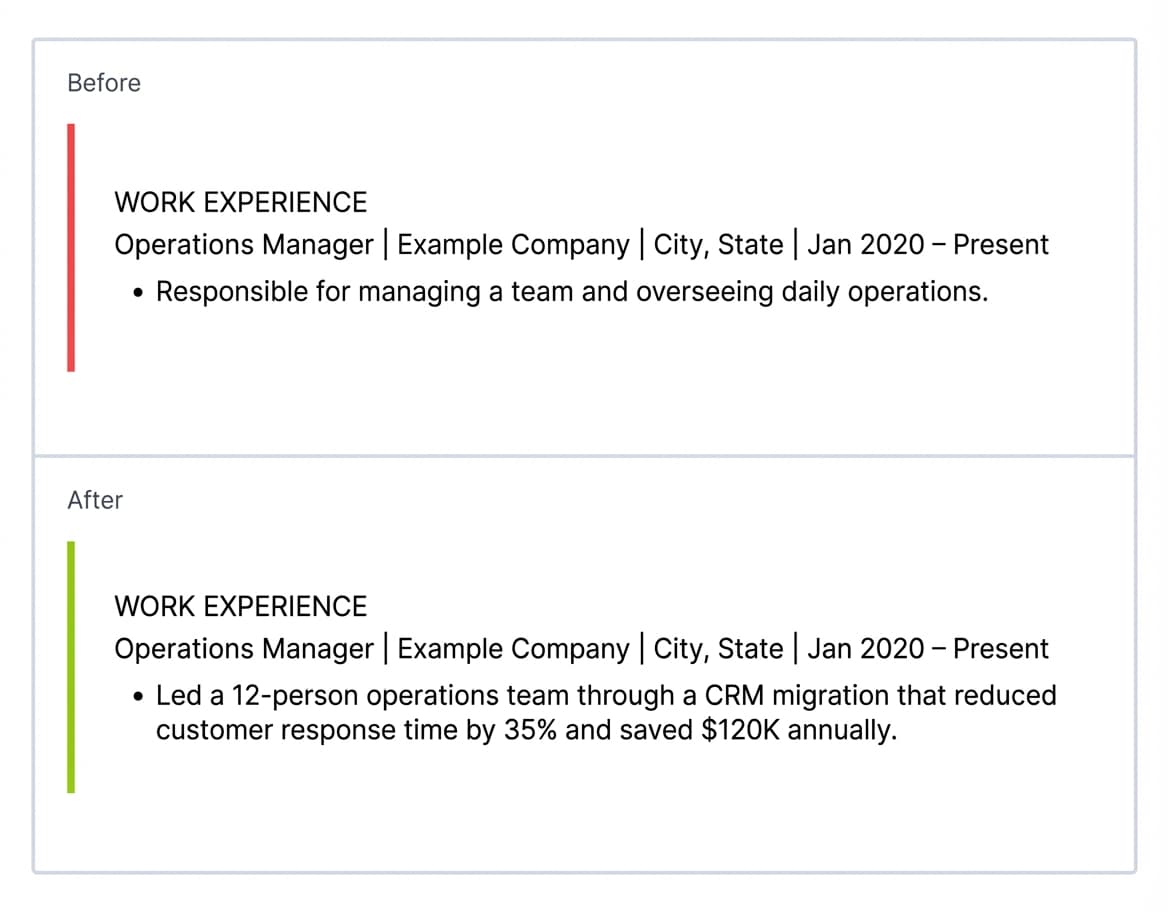
Before (mid-career): "Responsible for managing a team and overseeing daily operations."
After (mid-career): "Led a 12-person operations team through a CRM migration that reduced customer response time by 35% and saved $120K annually in vendor costs."
According to the U.S. Bureau of Labor Statistics, median employee tenure in the U.S. was 3.9 years in January 2024. That means a mid-career professional with 10 years of experience may have held three or four positions, making it entirely feasible to present a complete and focused resume within one to two pages.
Senior Professionals and Executives (15+ Years)
If you are at the executive level, you may need to show a longer career arc, sometimes stretching to 15 or even 20 years. The key difference at this stage is depth versus breadth: your most recent 10 to 15 years should receive detailed treatment, while earlier roles get high-level summaries that establish the foundation of your expertise.
Strategic curation matters here. Not every role from your 25-year career deserves a spot, even in summary form. Choose the positions that best illustrate your leadership trajectory and industry authority. If an early role at a recognizable company or a landmark project still carries weight, mention it, but keep the description to one or two lines.
Career Changers and Non-Traditional Paths
If you are switching fields, the timeline on your resume may look very different from someone on a linear career path. In many cases, listing only the last five to seven years makes sense, especially if your recent work, education, or certifications are directly relevant to your new direction.
The priority for career changers is demonstrating transferable skills. Frame your experience around the value it brings to your target role rather than trying to fill a chronological gap. Address career breaks by highlighting certifications, freelance projects, or volunteer work completed during those periods.
Ready to land your dream job?
Join 50,000+ job seekers who have already transformed their careers with our AI-powered resume builder.