
A Swiss CV (CV suisse) follows precise rules that match neither the French CV nor the American resume. In Switzerland, employers expect a photo, a date of birth, your nationality and sometimes your work permit type, all on one or two pages in reverse chronological order. These conventions often surprise people arriving from France or abroad, and in a country where more than a quarter of residents are foreign nationals a lot of applications come from outside. In this guide you will learn how to write a Swiss CV that meets these expectations, section by section, with concrete before and after examples for every tricky point.
What sets a Swiss CV apart from a French one
Before the details, understand the Swiss logic. A Swiss recruiter wants to quickly see who you are, where you stand in your career and whether you can legally work in the country. The photo, nationality and permit are not misplaced curiosity, they are practical information expected by convention.
The photo is expected, not optional
In France the trend is towards CVs with no photo, even anonymous CVs to fight discrimination. In Switzerland it is the opposite: a recent colour photo on a neutral background is the norm. It sits at the top of the document, next to your contact details. Avoid the selfie, the holiday snap or the blurry image. A polished professional photo sends the right signal.
Personal details are more extensive
A Swiss CV includes elements that would be unusual elsewhere: the full date of birth, your nationality or nationalities, often the place of origin for Swiss citizens, and the permit type for foreign nationals. These entries reassure the employer about your right to work and are part of local convention.
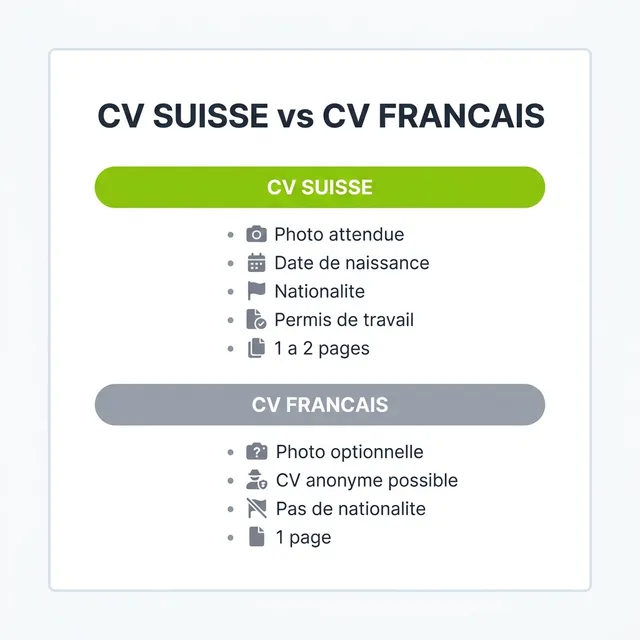
If you come from France, remember the key difference: here there is no anonymous CV, the photo is expected and personal details are fuller. Adapting your document to these habits earns you credibility from the first glance.