Most people who want to manage are already doing parts of the job. They unblock colleagues, they get pulled into the difficult conversations, they are the person a new hire is quietly told to ask. Then a management role opens, and it goes to someone else.
That gap is rarely about competence. It is about evidence. Promotion committees are not asking whether you are good at your job, they already know that. They are asking a different question: what happens to a team, a budget and a deadline when you are the one deciding?
Here is how to answer that question before anyone asks it.
The bar moved, and it moved away from tenure
Employers expect 39% of the skills they need to change by 2030, according to the World Economic Forum. The same research puts leadership and social influence among the skills rising fastest in demand.
Read those two findings together and the message for an experienced professional is uncomfortable but useful. Your accumulated experience is depreciating faster than it used to, and the part of your profile that is appreciating is the part most people never deliberately build: how you work through other people.
So the case for your promotion is no longer "I have done this for nine years." It is "here is what happened when I was responsible for something bigger than my own output."
Build the evidence before you have the title
You do not need permission to do most of a manager's job. Volunteer for the work that sits outside your description but that the organisation actually cares about:
Lead a project that crosses two teams. Fix a process that quietly wastes everyone's week. Take the recommendation to the senior stakeholder yourself instead of handing it up. Onboard the next new hire properly.
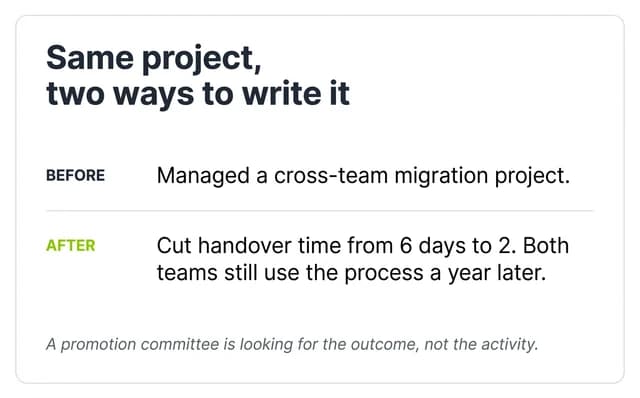
Then record the outcome, not the activity. "Managed a migration project" tells a promotion committee nothing. "Cut handover time from six days to two, and the two teams still use the process a year later" tells them what happens when you are in charge.