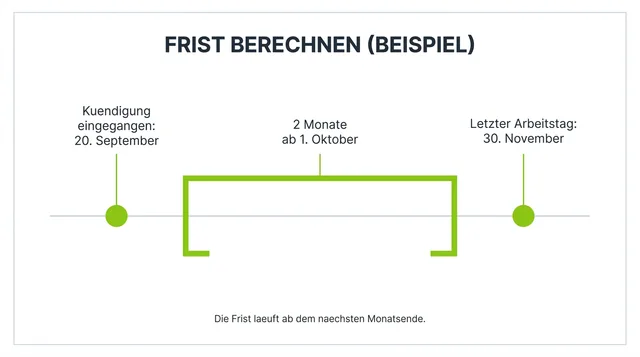
The notice period decides when your employment truly ends, and when you can start the new job. In Switzerland it is clearly regulated, yet many people calculate it wrongly because they overlook the effective date or the moment of receipt. A miscalculation of a few days can push your departure back by a full month.
This guide explains the statutory notice periods under Art. 335c OR, shows with an example how to calculate the period correctly, and covers the important special cases: probation, protection periods for illness or pregnancy, fixed-term contracts and rules in a collective labour agreement. By the end you will know exactly when your employment ends.
The statutory notice periods under Art. 335c OR
As long as your employment contract contains no different, permissible arrangement, the statutory periods of Art. 335c OR apply. They depend on how long you have been employed.
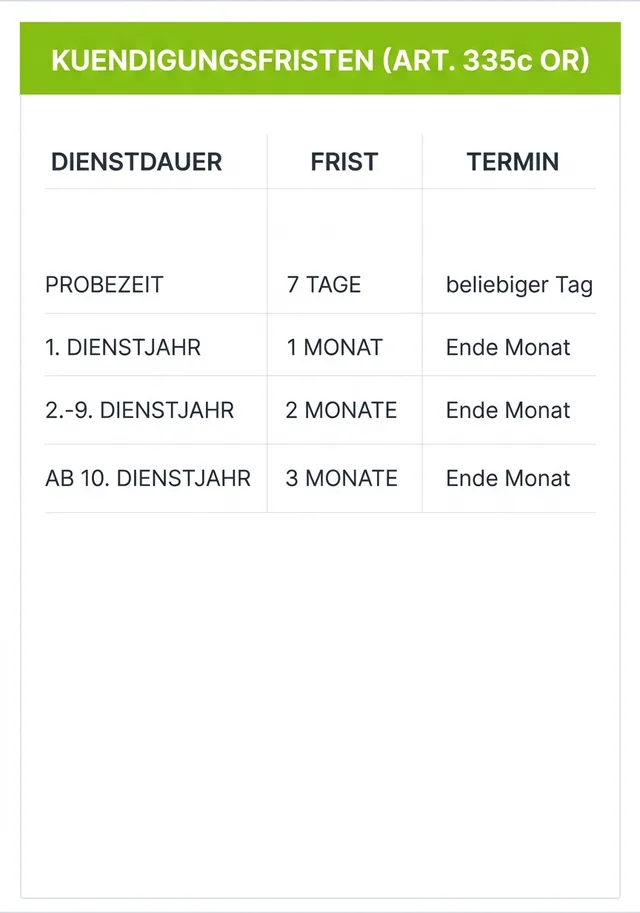
According to SECO, after the probation period the following apply: one month in the first year of service, two months from the second to the ninth year of service, and three months from the tenth year. Notice always takes effect at the end of a month, unless the contract provides otherwise.
These periods apply equally to both sides, to you and to your employer. They may be extended or adjusted by contract, but below one month only through a collective labour agreement and only in the first year of service. So always check your employment contract first: it may set a longer period, which then takes precedence over the statutory one.
The notice period during probation
During the probation period everything is shorter. Without a different written agreement, the probation period lasts one month and can be extended to a maximum of three months. During this time the notice period is only seven days.
One important difference: during probation you can give notice to any day, not just the end of a month. Anyone who resigns on the 10th of a month during probation is free seven days later. After probation, by contrast, the end of the month is almost always the effective date.