In Switzerland, the cover letter often decides whether your application clears the first screen or lands in the rejection pile. The CV shows what you have done; the letter shows why you, for this specific role, at this specific employer. That is where the difference lies between one application among a hundred and the one they keep.
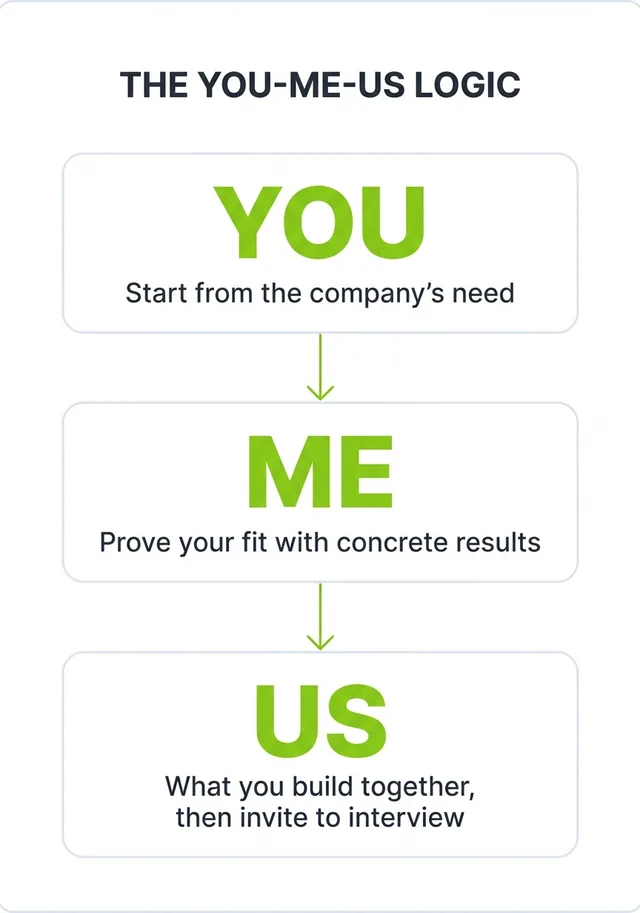
This guide gives you a clear cover letter structure suited to the Swiss market, the you-me-us logic for building your arguments, a full example to adapt, the right sign-off, and the most common mistakes. By the end you will know how to write a letter that makes them want to meet you.
What a cover letter is really for
The cover letter is not a summary of your CV. Its job is to connect your background to the company's concrete needs and to show something the CV cannot: your genuine interest and your understanding of the role. A recruiter is looking for the answer to one simple question, why they should meet you.
In Switzerland, the letter is part of the application dossier, alongside the CV, work certificates and diplomas. It should fit on a single A4 page and stay sober and professional. The official portal orientation.ch and the career service of the University of Bern stress one central rule: every letter is tailored to a specific posting. A generic letter is spotted in a second and works against you.
The structure of a Swiss cover letter
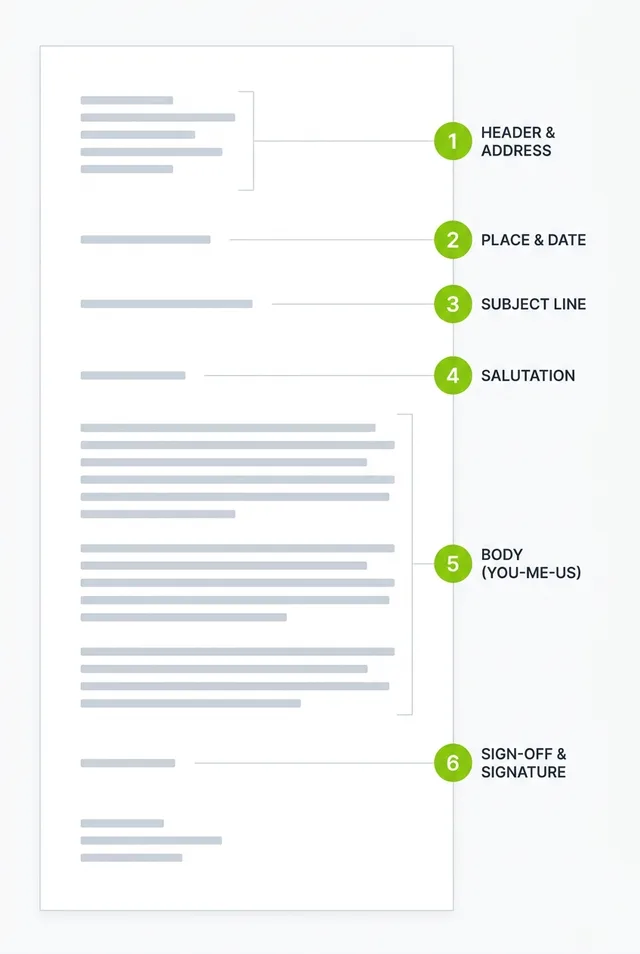
A cover letter follows a fixed formal structure. Respecting that order shows you know the codes, before the content is even read.
The header and subject line
Top left go your full contact details (name, address, phone, email), then the company's address with, ideally, the name of the contact person. On the right, the place and date, for example "Lausanne, 30 July 2026". Then comes the subject line, in bold and without a full stop, naming the role and the source of the ad.