A layoff lands as a personal verdict. The numbers say otherwise, and they also say something more useful about where the actual danger lies.
The US Bureau of Labor Statistics counted 7.4 million displaced workers between 2023 and 2025, up 1.2 million on the previous survey. Of those, 3.3 million had held the job for three years or more. By January 2026, 66.1% of that long-tenured group were back in work.
So reemployment is still the normal outcome. Here is the part that gets less attention: of those who were reemployed in full-time jobs, about 49% were earning as much or more than before, down from about 62% two years earlier.
That is the thing to plan around. The risk is not that you never work again. The risk is that you take the first acceptable offer at a number you then spend years climbing back from. Almost everything below is about buying yourself enough room to avoid that.
And layoffs are not the only way a career stalls. Illness, caregiving and family emergencies interrupt just as many people, with less warning and less sympathy. The advice holds either way.
Week one: buy time, because time is the thing that gets you paid
Money pressure is what pushes people into the wrong job. When rent is three weeks out, every opening looks acceptable and your negotiating position quietly disappears.
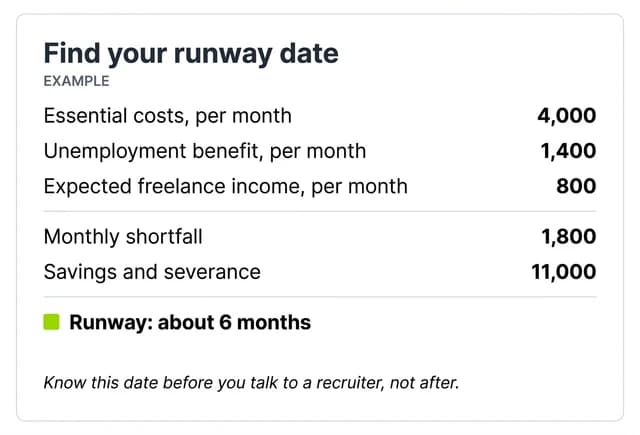
So do the boring arithmetic first. Write down what the next three to six months actually cost you, stripped to essentials. Set that against severance, savings, any unemployment benefit you qualify for, and a realistic figure for freelance income. What you want out of this is not a perfect budget. It is a date: the point at which your options genuinely narrow.
Knowing that date changes how you behave. Four months of room means you can decline a lowball offer and mean it. Three weeks of room means you cannot, and you should know which of those you are in before you sit down with a recruiter rather than after.