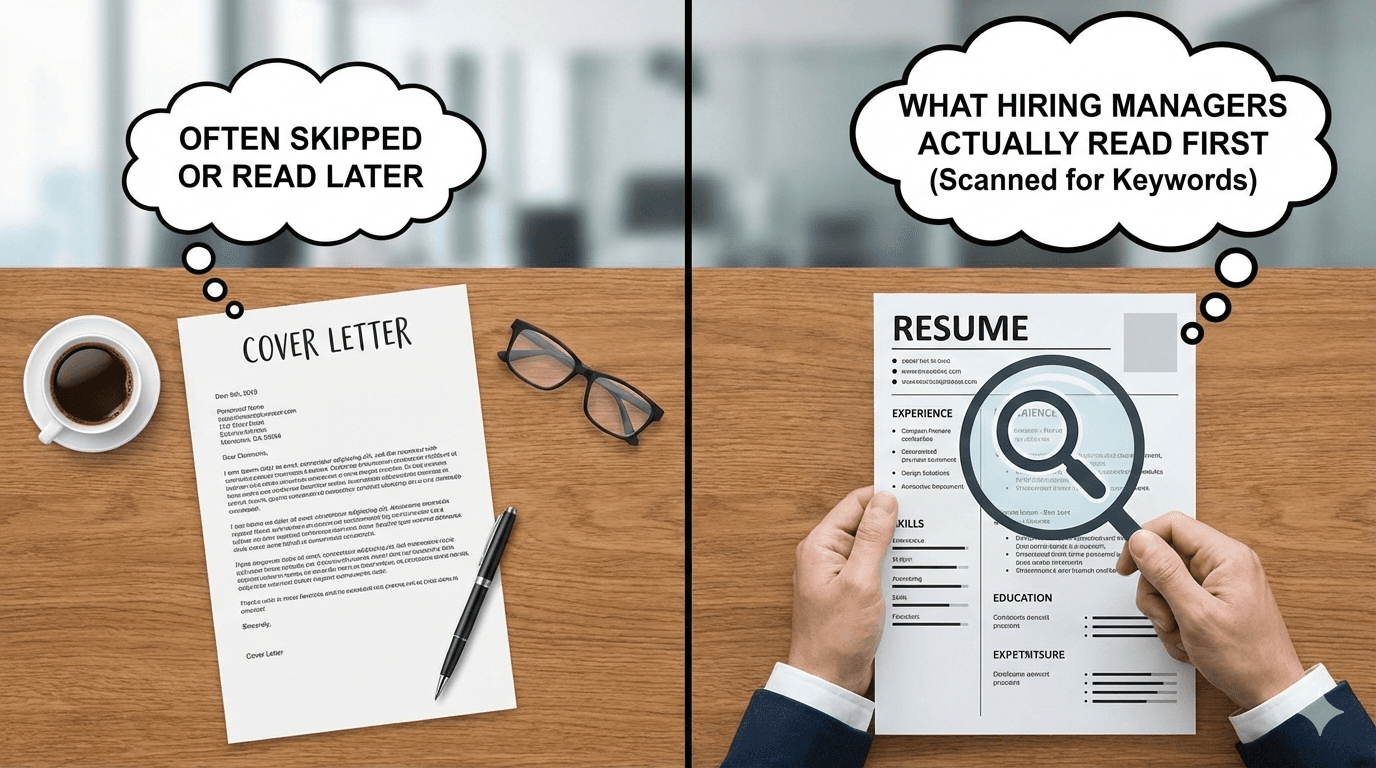
Technology makes this trend stronger, with over 70% of large companies using ATS technology to screen candidates and 98% of Fortune 500 companies employing these systems. These platforms scan resumes for keywords and qualifications.
Small companies with fewer applicants value cover letters more. One recruiter explains, "Cover letters are especially influential when submitted to companies who hire dozens instead of hundreds; the start-ups looking to change the world with team members who are equal parts talented and passionate".
These organizations often base their interview decisions on cover letters.
How Resumes and Cover Letters Work Together
Your cover letter and resume team up to create an application package that packs more punch than either could alone. These two documents tell your professional story from different angles that work together perfectly.
Complementary Roles in the Application Process
Your cover letter and resume each play their own crucial part in showcasing who you are. The cover letter connects your resume to the job you want and shows you know your stuff about the company. It fills in the gaps your structured resume leaves open and puts your qualifications in context.
Cover letters give you room to tell the full story behind your resume's achievements. To cite an instance, your resume might say you increased sales by 25%, while your cover letter can tell the story of your strategy and the hurdles you jumped. This context helps hiring managers see the real depth of your experience and picture how you'd fit into their team.
Your resume shows what you can do, and your cover letter explains why those skills matter for this job. Together, they create a story that helps you stand out from other candidates.
Consistency in Design and Messaging
The look and message of both documents need to match. The same font, size, and colors create a professional package. This attention to detail shows you're organized - something employers love to see.
A matching design creates your personal brand that sticks in people's minds and makes your application easy to read. Beyond just looking good, this consistency makes important information jump off the page.
Using Keywords Across Both Documents
Smart use of keywords in both documents will boost your chances of landing the job. Here's how to do it:
- Pull keywords from the job posting and weave them naturally into both documents
- Look at similar job posts to spot common industry terms
- Mix technical terms with soft skills to show you're well-rounded
Keywords help your application get through ATS systems that screen candidates before humans see them. Plus, recruiters will find your application faster when they search for specific terms.
The trick is to use keywords naturally. Each one should fit smoothly into your story and come with real examples that show you know your stuff.
Real Recruiter Insights: What They Actually Read First
Recruiters approach cover letters and resumes differently based on a candidate's qualifications. Their experience with thousands of job applications shows clear patterns in how they process applications based on how well candidates fit the role.
Scenario A: Unqualified Candidates
Recruiters take a practical approach with candidates who lack mandatory job requirements in experience or education. They scan the resume first to spot missing qualifications and give the cover letter a quick look out of professional courtesy. A Fortune 500 recruiter explains, Even an exceptional cultural and personality fit couldn't compensate for the lack of essential skills. Neither document helps candidates overcome basic qualification gaps.
Scenario B: Partially Qualified Candidates
The cover letter is a vital factor for candidates who meet some but not all requirements. This document often determines whether a candidate moves forward or gets rejected. The cover letter is critical when a recruiter is on the fence about a candidate who doesn't meet all job requirements. A compelling personal story might make up for small skill gaps, making this the moment where the cover letter matters most.
Scenario C: Fully Qualified Candidates
The process changes for candidates who meet all stated requirements. Recruiters review these resumes first to confirm qualification matches and quickly scan the cover letter. A talent acquisition specialist notes, These candidates are always forwarded to hiring managers—unless their cover letter contains inappropriate or unprofessional content. The cover letter serves to confirm rather than decide.
The Hybrid Approach: Reading Both in Tandem
Many hiring professionals now use a hybrid method that goes beyond these scenarios. They understand the merits of both the resume and cover letter and choose to evaluate them in tandem. This complete approach helps employers assess qualifications and communication style together to build a better picture of the candidate.
Some organizations use this method systematically. They check if applications meet formatting requirements for electronic screening and review both documents together to make better decisions.
Tips to Make Both Documents Stand Out
Your application materials need to line up strategically between your cover letter and resume. Both documents deserve careful attention to maximize their effect on hiring managers.
Tailor Each Document to the Job Description
A customized approach to both documents will improve your chances of success by a lot. Hiring managers take just 6-10 seconds to scan your original resume, which makes personalization vital. The job posting's language—especially from qualifications and responsibilities sections, should be reflected in your documents.
Large employers often use Applicant Tracking Systems (ATS) that filter applications based on specific keywords. Your application needs these relevant terms to reach human reviewers. A well-tailored application shows your genuine interest in the position and proves you understand the role.
Use Matching Headers and Fonts
Professional documents need visual consistency to create an immediate impression. Simple, ATS-friendly fonts like Arial, Calibri, or Verdana in 10-12 point sizes work best for both documents.
Your formatting should stay consistent with similar headers, matching margins (typically 0.5"-1"), and related styling elements. This cohesive presentation becomes your personal brand and makes your application both memorable and professional.
Highlight One Key Achievement in Both
Your most relevant accomplishment should feature strategically in both documents. The resume needs a quantifiable bullet point, while your cover letter should expand on its context and effect. This approach reinforces your most impressive qualification. The achievement needs specific numbers or percentages to show measurable results.
Avoid Redundancy While Reinforcing Strengths
Recruiters often skip cover letters that just repeat resume content. Your cover letter should add to—not duplicate—your resume's information. The context, motivation, and extra details about your qualifications matter more. To name just one example, instead of "I'm interested in the position because..." try "This position will allow me to..." This strategy maintains consistency while offering fresh, valuable information in both documents.
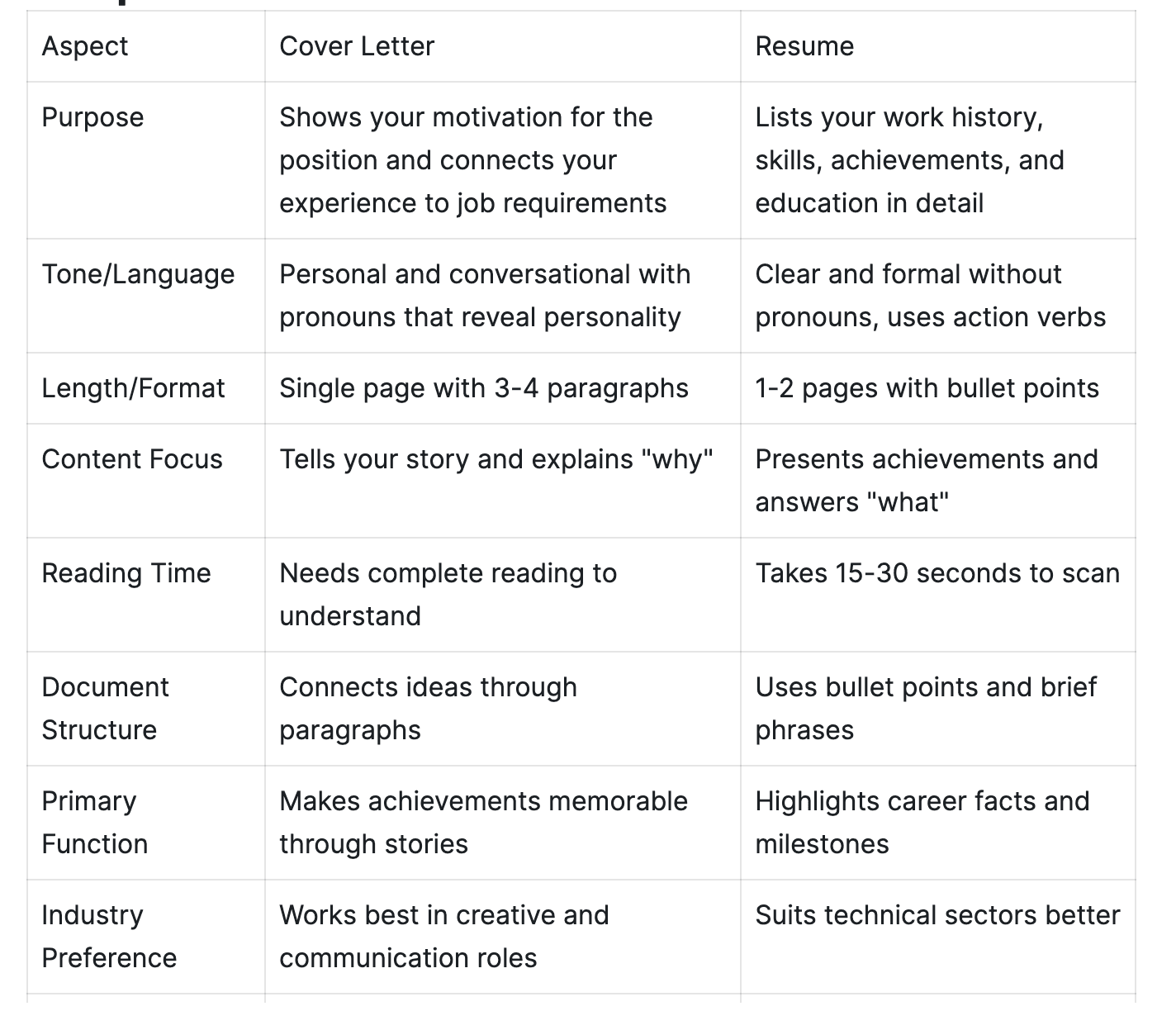
Comparison Table
Job seekers create better application packages when they understand how cover letters and resumes work together. This piece explores how these two documents complement each other in the hiring process. Your resume showcases professional accomplishments, while your cover letter tells the story behind them and connects them to the role you want.
Several factors determine which document hiring managers read first. The type of job affects this substantially—creative fields tend to value cover letters more, while technical positions usually start with resumes. A company's size and culture play a role too. Smaller, values-driven organizations generally care more about cover letters than large corporations that process thousands of applications.
Your qualification level shapes how recruiters look at your application. Candidates with partial qualifications can benefit most from compelling cover letters that help overcome minor skill gaps. On the flip side, fully qualified candidates might find their resume carries more weight at first, with the cover letter acting more as confirmation than a deciding factor.
Smart job seekers treat these documents as partners rather than competitors. They create a professional impression by matching the visual style across documents and strategically place keywords to clear ATS filters. It also helps to highlight a key achievement in both documents to reinforce your best qualification without being repetitive.
The resume vs. cover letter debate doesn't have one right answer. Successful candidates prepare both documents carefully and tailor them to specific positions while keeping their design and message consistent. Though hiring managers might approach these documents differently, one thing's clear—well-crafted resumes and cover letters work together to tell your complete professional story, whatever gets read first.