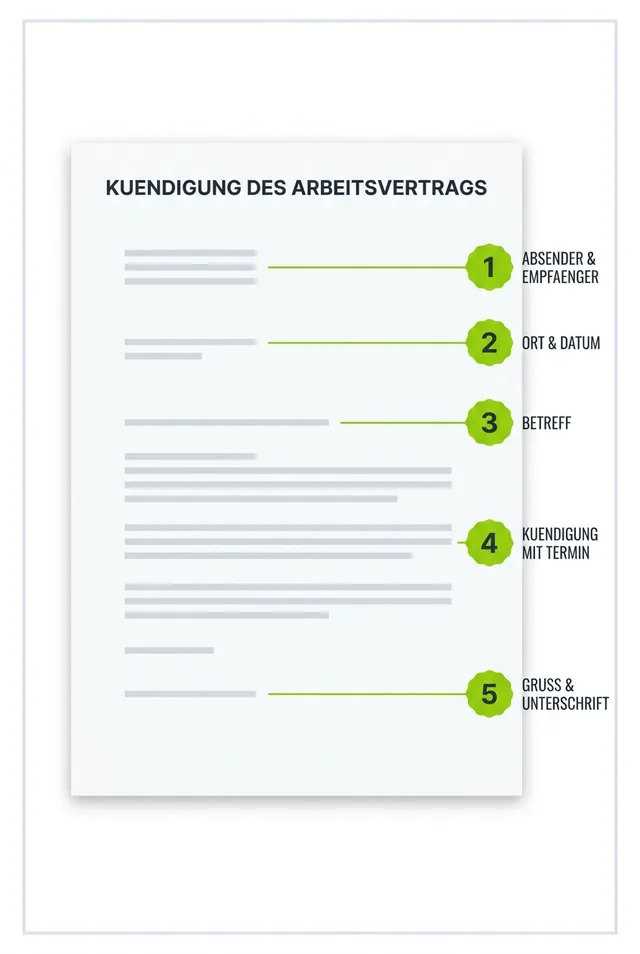
A resignation is quickly spoken but takes some skill to write cleanly. In Switzerland, a correct resignation letter decides whether your employment ends smoothly or whether there is a dispute over notice periods and end dates. The good reputation you have built over years should not fail on a sloppy final letter.
This guide gives you a ready-to-use resignation letter template under Swiss law, explains the statutory notice periods under Art. 335c OR, shows the correct structure and names the most common mistakes. By the end you can draft your resignation correctly in minutes and hand it over cleanly.
The legal basics in brief
An ordinary resignation in Switzerland is, in principle, not bound to any particular form. For the normal case the law does not require written form, provided your employment contract says nothing else. Even so, you should always resign in writing: only a letter proves, in the event of a dispute, that and when you resigned.
Send the resignation letter by registered mail (Einschreiben) or have your in-person handover confirmed with a date and signature. What counts is when the resignation reaches the other side, not when you send it. A registered letter delivered only at the end of the month can push the notice period back by a full month.
Also important: you do not have to give a reason for your resignation. An ordinary resignation is valid without any justification. Keep the letter short and factual for that reason.
The notice periods under Art. 335c OR
The statutory notice periods are set out in Art. 335c OR and apply as long as your employment contract contains no (permissible) different arrangement. They depend on how long you have been employed.
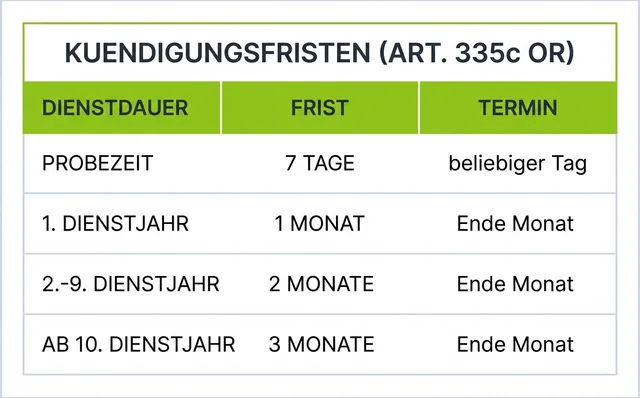
After the probation period, the following apply according to SECO: one month in the first year of service, two months from the second to the ninth year of service, and three months from the tenth year of service. Notice always takes effect at the end of a month, unless the contract says otherwise.