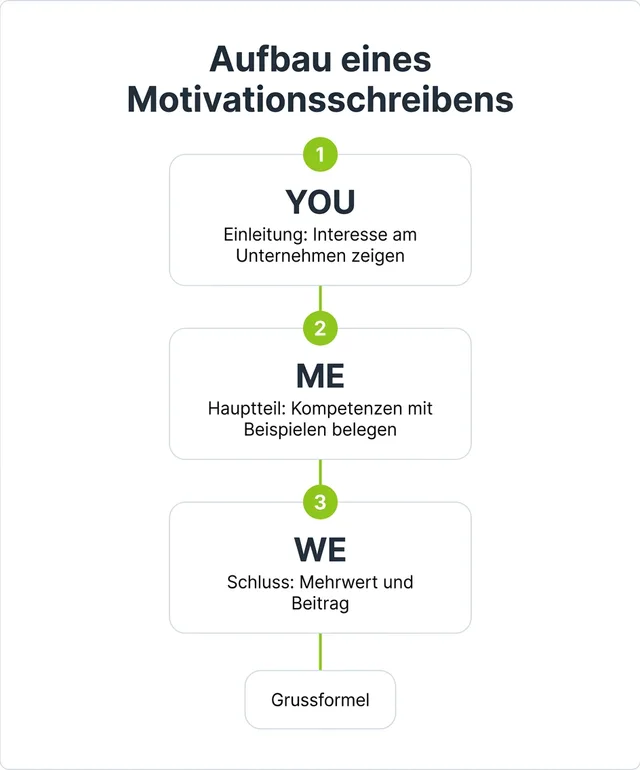
In Switzerland, a strong Motivationsschreiben (motivation letter) often decides whether you get invited to interview or disappear into the pile. It is the only document in your application dossier where you explain, in your own words, why you in particular fit this specific role. Yet most applicants reach for the same empty phrases that recruiters have been reading for years. In this guide I show you, as the founder of Careerkit and a longtime career coach in Zurich, how to build a Motivationsschreiben that proves your motivation instead of merely claiming it, with a clear structure, an adaptable template, and concrete wording.
What is a Motivationsschreiben and when do you need one?
A Motivationsschreiben is a one-page document in which you set out your reasons for applying and show the concrete value you offer an employer. It is more personal and more argumentative than a plain list of your career stations, and it answers one core question: why you, why here, why now.
Motivationsschreiben or Bewerbungsschreiben: the difference
In Switzerland the terms are often confused. The Bewerbungsschreiben, also called Anschreiben, is the formal cover letter that accompanies almost every application for a permanent job. The Motivationsschreiben focuses more sharply on your personal motivation and fit, and is typically required for study places, scholarships, trainee programs, and competitive or values-driven roles. In practice the two merge into a single letter per application: you do not write two documents, but one convincing letter that serves both functions. If you are looking for the classic cover letter, our Anschreiben template walks you through the right structure.
When a Motivationsschreiben is worth it, and when it is not
A Motivationsschreiben makes sense whenever the role is highly competitive, the employer emphasizes culture and values, your CV needs to explain a change or a gap, or soft skills and language abilities are central. If the posting explicitly asks for only a CV and references, skip it, because an unrequested document quickly reads like filler. The recommend enclosing a short, relevant letter when in doubt rather than saying nothing at all.