A template takes the formatting off your plate, but not the thinking. It delivers a professional layout and prevents formal mistakes, yet you will only convince a hiring manager with content that genuinely fits you and the role. This guide shows you how to use a template correctly, personalize it, and avoid the most common mistakes, with concrete before-and-after examples you can adapt.
I am Nishant Modi, founder of CareerKit, and from my desk in Zurich I have reviewed thousands of applications. The advice below is the same I give in one-on-one coaching: practical, specific, and built around what hiring managers in German-speaking markets actually look at. Note that this guide covers the German Anschreiben, so the example phrases stay in German, the language you will write the letter in.
What Is a Cover Letter Template and Why Should You Use One?
A cover letter template gives you a finished layout with a clear structure, predefined formatting, and matching design elements. It lays the groundwork for an Anschreiben that convinces on form and on content. Before you pick one, it helps to understand what a template does and where its limits are.
Saving Time and Looking Professional
A template speeds up the process noticeably, because you no longer have to fuss over margins, spacing, and alignment. You get a reliable structure based on common standards like DIN 5008, a tidy layout for a coherent first impression, and a consistent format across your cover letter and CV. That consistency is the point: your Anschreiben and your Lebenslauf should share the same fonts, sizes, and design elements so the two documents look like a single set.
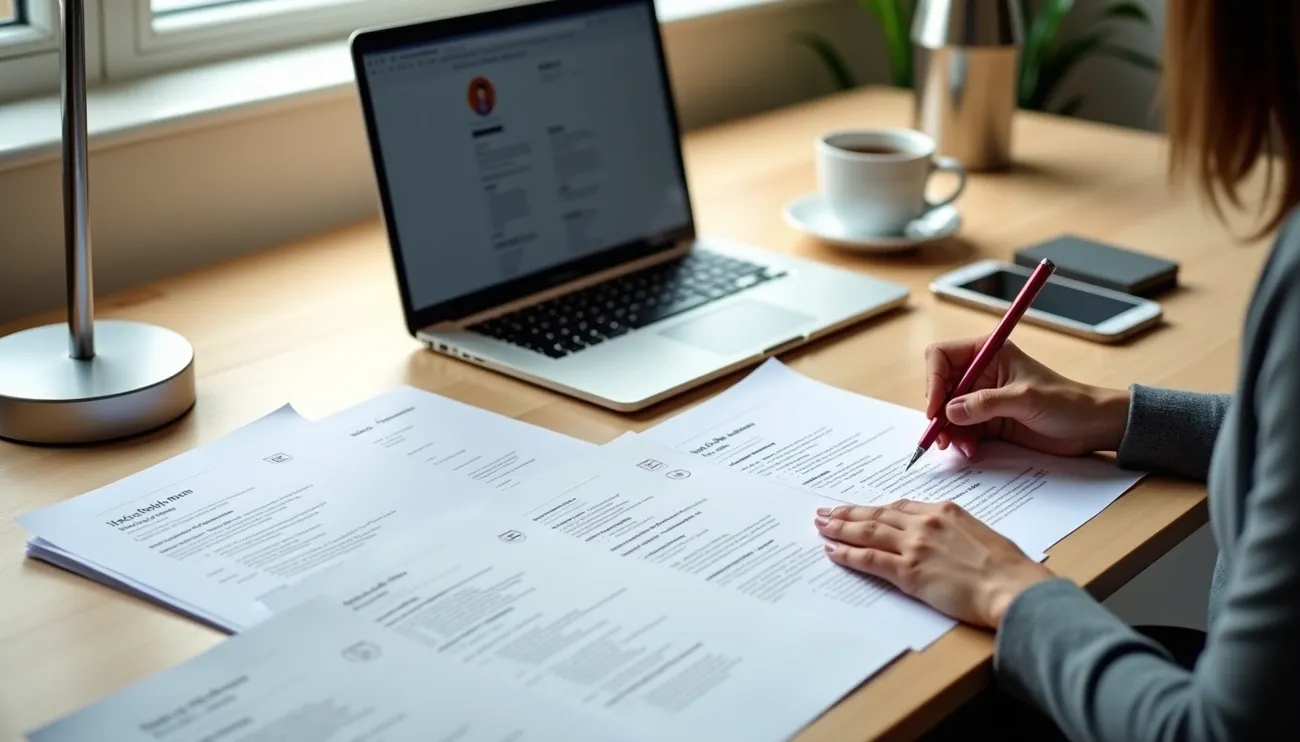
A good template has clear hierarchy, enough white space for readability, and uniform formatting throughout. If you want to build your CV in the same style, our resume builder helps you align both documents visually. For an overview of which sections belong in a complete CV, see our guide to every resume section explained with examples.
A Word Template Versus Other Formats
Word templates in .docx format dominate because they are easy to edit. The German Federal Employment Agency, for example, provides classic and modern templates along with an application guide. Some applicants prefer Open Office in .odt format, or work directly in an online builder that handles the formatting in the browser.
More important than the tool is ATS compatibility. Applicant tracking systems read clean fonts like Arial, Calibri, Helvetica, or Times New Roman reliably, while unusual formats can cause problems. Stick to standard formats such as Word (.docx) or PDF. If you are unsure which font suits your application, you can compare options side by side with our font preview tool.
Free Versus Paid Templates
Free templates are perfectly sufficient for almost any stage of your career. You will find modern designs with color accents as reusable Word files without spending a cent. The value of paid templates usually lies only in a larger selection, not in better chances.
One rule matters more than the price: a template helps, but you only succeed with a cover letter that genuinely fits you. A copy-paste Anschreiben stands out immediately, in the wrong way. You always have to adapt the content individually, and that is what the rest of this guide is about.
The Essential Components of a German Cover Letter Template
Every professional template follows a clear structure. Six core elements form the backbone of your application and shape that first impression. Once you know these building blocks, you can fill in any template correctly.
Letterhead With Contact Details
The letterhead sits at the very top and holds your full contact details: first and last name, street and house number, postal code and city, plus phone number and email address. Optionally, add links to professional profiles like LinkedIn or Xing. Use only a serious email address in the format firstname.lastname@provider.de.
Place the date flush right, a few lines below the recipient's address, in the format DD.MM.YYYY. The subject line follows beneath it, flush left, naming the position you are applying for. Set the subject in bold and never write the word "Betreff" in front of it. If the posting lists a reference number, add an extra reference line.
Salutation and Opening
The personal salutation sits two blank lines below the subject. Avoid "Sehr geehrte Damen und Herren" (Dear Sir or Madam) where you can, and instead research the contact person's name on the company website or through professional networks. A comma follows the salutation, and the text then begins in lowercase, as German convention requires.
Before: "Sehr geehrte Damen und Herren," (Dear Sir or Madam)
After: "Sehr geehrte Frau Dr. Müller," (Dear Dr. Müller)
The opening sparks interest and states your motivation. Skip worn-out first sentences that say nothing.
Before: "Hiermit bewerbe ich mich auf die ausgeschriebene Stelle als Projektmanagerin." (I hereby apply for the advertised position as project manager.)
After: "Ihr Anspruch, Softwareprojekte termintreu und ohne Reibungsverluste auszuliefern, deckt sich genau mit dem, wofür ich in den letzten fünf Jahren stehe." (Your goal of delivering software projects on time and without friction is exactly what I have stood for over the past five years.)
Main Body With Qualifications
The main body runs only a few short paragraphs and answers the central question: why are you the right person for this role? Connect your qualifications to the requirements in the posting, and back your strengths with concrete examples and numbers rather than generic claims.
Before: "Ich bin teamfähig, motiviert und belastbar." (I am a team player, motivated, and resilient.)
Pret a decrocher votre emploi de reve ?
Rejoignez plus de 50 000 chercheurs d'emploi qui ont deja transforme leur carriere avec notre createur de CV propulse par l'IA.