Your first student internship application is coming up and you have no idea where to start? That happens to almost everyone. A student internship in year 8 or 9 is part of school life for most pupils and is your first real step into the working world. The reassuring news: nobody expects years of experience from you. What counts above all is your motivation and your interest.
In this guide you will walk through your entire application step by step. You will learn what belongs in your cover letter, how to build your CV, and how to format and send everything. Along the way you get concrete before-and-after examples to follow, so your application convinces in the end.
What Goes Into a Student Internship Application?
A complete application is made up of several documents that together leave a good impression. The basic structure is manageable and usually consists of three building blocks, plus the right order.
The Cover Letter
The cover letter is the heart of your application. This is where you introduce yourself and show why this particular internship interests you. It fits on one A4 page and explains your motivation and your strengths. Unlike the CV, here you can score points with an honest, motivated text even if you have little experience yet. What matters is making clear why you chose this company and what appeals to you about the field.
The Table-Format CV
The CV gives the company a quick overview of you. Here you list your personal details, your school career, practical experience such as earlier internships or part-time jobs, and your skills and hobbies. It is built in reverse chronological order, so the most recent entry comes first, just as the Federal Employment Agency recommends. For a student internship, one page is plenty. Do not worry if your CV is still short; employers know you are right at the start.
References and Attachments
As an attachment you include your most recent school report. Some companies also want a work sample or certificates, for example for a first-aid course or a language qualification. Such proof belongs in only if it is relevant to the role. If you have already done an internship or held a part-time job, you can send the corresponding reference. An application photo is no longer required these days. If you do use one, it should be a friendly, neutral portrait. And always send copies, never the originals.
The Right Order of Documents
The order makes it easier for the employer to keep an overview. The cover letter comes first, followed by the CV and finally the attachments. Sort the attachments in the order the related entries appear in your CV. Most companies expect this clear structure for application documents.
If you would rather not build your cover letter and CV from scratch, you can create both with the CareerKit resume builder and save them as a clean PDF.
How to Write the Cover Letter for Your Internship
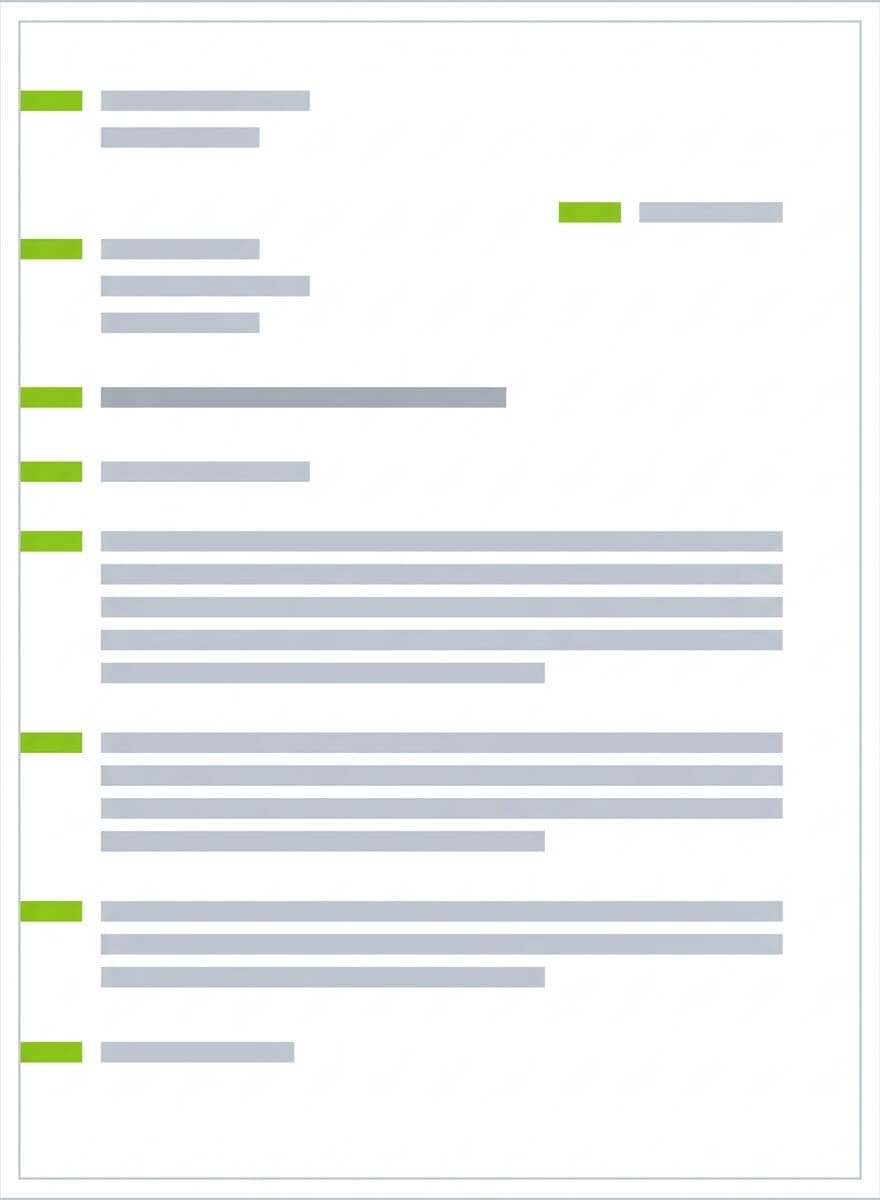
The cover letter follows a clear structure based on DIN 5008, the German standard for business letters. The right structure makes you look professional and makes it easy for the company to place your application.
Letterhead and Subject Line
Top left go your personal details: name, address, phone number, and a professional email address built from your first and last name. Below that come the company's contact details with a contact person. Place and date go aligned to the right. Write the subject line in bold and name the period and the field in it, for example "Application for a student internship from 10 to 21 March in your car workshop." Leave out the word "subject" itself, along with special characters, emojis, or underlining.
The Opening: How to Spark Interest
Address a specific person in the salutation, for example "Dear Mr Müller." You will find the name in the ad, on the website, or with a quick phone call. The first sentence decides whether the rest gets read. Skip standard phrases and open directly with your motivation.
Before: "I hereby apply for a student internship at your company."
After: "For as long as I can remember I have been tinkering with my bike at home, and that is exactly why I want to find out in your car workshop how professionals work on engines."
The second version shows genuine interest at once and makes the reader curious about the rest.
The Main Body: Strengths and Motivation
In the main body you explain in two or three short paragraphs why you want the internship and what sets you apart. The most common mistake is merely claiming qualities. Instead, tie each one to a concrete example from school, a hobby, or daily life.
Before: "I am reliable, I work accurately, and I am very motivated."
After: "In woodwork class I most enjoy small projects where millimetres matter. I last showed how carefully and patiently I work when I built a birdhouse that I planned entirely on my own."
Relate this to the requirements of the role and pick your strongest arguments. Do not simply retell your CV; make clear why these experiences will help you in the internship. If the right words escape you, the CareerKit skills generator helps you put your strengths into words.
Closing Line and Sign-Off
Ready to land your dream job?
Join 50,000+ job seekers who have already transformed their careers with our AI-powered resume builder.