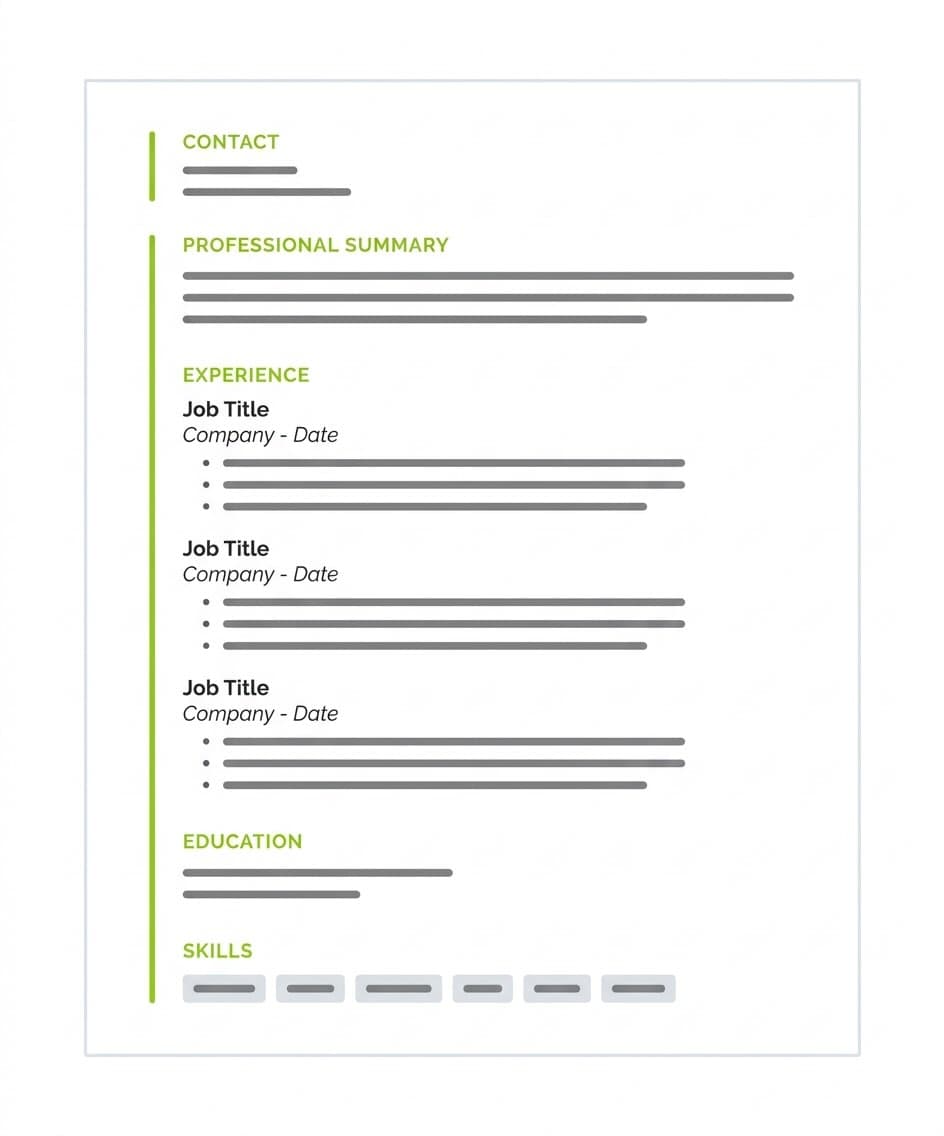
Pick the wrong resume format and your application can stall before any human ever opens it. Pick the right one and the same work history reads as a clear, confident case for the job. The decision sounds technical, but it is one of the highest-leverage choices you make during a job search.
Most job seekers in 2026 are weighing two options: a chronological resume that walks through your work history in reverse order, or a functional resume that leads with skill groupings and pushes job titles to the back. There is also a third option that often outperforms both. The right answer depends on what your career looks like, who is reading the resume, and how the software in front of the recruiter is built to read it.
This guide breaks down how each format performs in 2026, where each one wins or loses, and how to decide which one belongs on your next application.
What Resume Formats Look Like in 2026
The hiring funnel has changed faster in the last two years than it did in the previous ten. Before you choose a format, it helps to understand what your resume is actually walking into.
How ATS and AI Screening Work Today
Almost every mid-size and large employer uses an applicant tracking system to receive, parse, and rank applications. According to Select Software Reviews, nearly 99% of Fortune 500 companies use an ATS to handle hiring at scale. The system extracts your contact details, work history, education, and skills, then converts what it pulls into a structured record that a recruiter can search.
AI now sits on top of that pipeline. SHRM's 2025 Talent Trends report shows that AI use in HR jumped to 43% in 2025, up from 26% the year before, and recruiting is the single most common application. Inside recruiting, SHRM data shows 44% of organizations using AI to screen resumes and 51% using it across recruiting tasks broadly.
What that means for you is simple. A clean, predictable structure is no longer a stylistic preference. It is the format that lets the software find your job titles, dates, and skills in the right places so a recruiter can act on them. If you want a deeper walkthrough of every section a strong resume needs, covers the structure piece by piece.