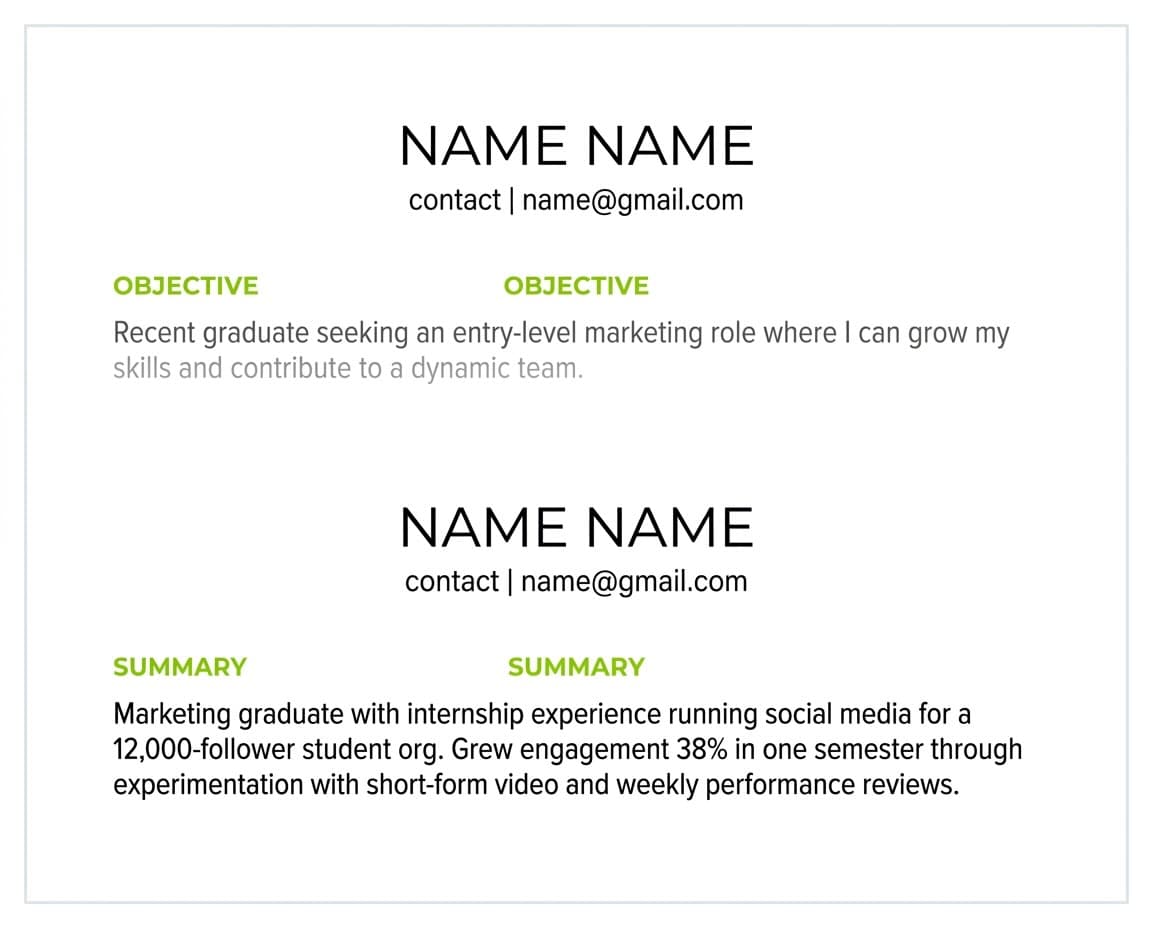
Choosing between a resume objective and a resume summary feels like a small decision until you remember what is actually at stake. According to the Ladders eye-tracking study reported by HR Dive, recruiters spend an average of 7.4 seconds on the initial scan of a resume. That window decides whether you advance or get filed under "no," and most of that attention lands at the top of the page, which is exactly where your opening statement sits.
In 2026, the professional summary has won. Objectives describe what you want from an employer; summaries prove what you can do for one. There are still narrow situations where an objective makes sense, but they are exceptions, not the rule. This guide walks through when each one works, what makes a summary strong, and how to write one that earns you a callback.
What Is a Resume Objective and When Should You Use It?
Resume objectives have a long history in career advice, and that history is part of why they have become a liability. They were designed for a hiring market that no longer exists.
Definition and Purpose of Resume Objectives
A resume objective is a one or two sentence statement at the top of your resume that names your career goals and the type of role you are targeting. Where a summary showcases what you have done, an objective points toward where you want to go. According to Indeed's career advice library, the objective traditionally communicates two things: the job you are seeking and the skills you bring to it.
Originally, the format helped hiring managers quickly understand a candidate's career direction. But the format has a structural problem. By stating what you want, the objective foregrounds your needs over the employer's, and that mismatch becomes more obvious every year as hiring volumes rise.
Why Objectives Are Considered Outdated in 2026
The shift away from objectives is straightforward when you look at how recruiters actually read resumes. Eye-tracking research from Ladders, summarized by HR Dive, found that recruiters scan resumes in an F-pattern, looking for current title, recent companies, and dates. A statement that opens with "Seeking a position where I can grow..." gives them nothing useful in that 7.4-second window.