
The unsolicited application, known in Switzerland as a Spontanbewerbung, is the everyday way to approach a company you want to work for when no role is advertised. Almost always it goes by email now, and that is exactly where the first seconds are decided: the subject line, the salutation, the length and the attachment determine whether your application gets read or clicked away. This guide shows you the practical structure of an unsolicited application by email, gives you a short template to adapt, and names the mistakes most people make.
Spontanbewerbung or Initiativbewerbung?
A quick word, because the question comes up often: in Switzerland Spontanbewerbung and Initiativbewerbung mean practically the same thing, an application without a matching listing. Any difference is minor. This piece focuses on the practical email format and a template. If you want to understand more deeply why the approach works and when it pays off, read our detailed guide to the speculative application. Both target the same hidden part of the job market, which we describe in our piece on the hidden job market in Switzerland.
The unsolicited application by email
An unsolicited application by email has two parts: the short email itself and the full dossier attached. The mistake that costs the most is mixing the two and writing the whole application into the email body. Keep the email brief and put the substance in the PDF.
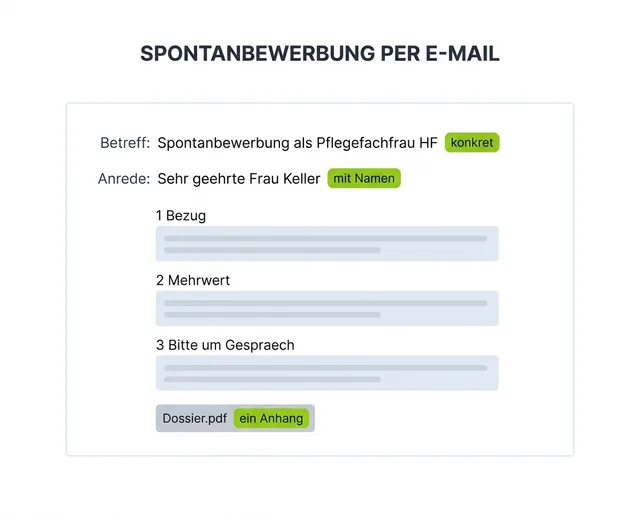
Subject line and salutation
The subject line names the role concretely and ideally the region, for example "Unsolicited application as a construction project manager, Bern region". A bare "Application" says nothing and reads like mass mail. Address the salutation to a named person. If you cannot find the name on the website, a short call to reception takes two minutes and usually provides it. A specific named contact markedly increases the chance of a real reply.