What Does CV Stand For? Meaning, and CV vs Resume Explained
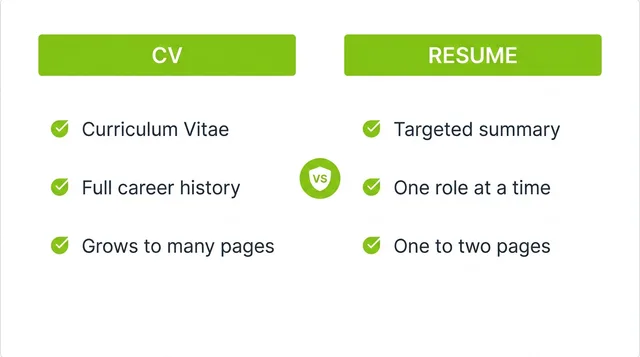
CV stands for curriculum vitae, a Latin phrase that means "course of life." It is pronounced "see-vee," and in practice it is a document that records your professional and academic history. That much is settled. What trips people up is everything after the definition: whether a CV is the same thing as a resume, why a job posting in London and a job posting in Chicago can use the word "CV" to mean two different documents, and which one you should actually send. This guide answers all of that, so the next time an employer asks for your CV you know exactly what they want and how to deliver it.

What CV Stands For and Where the Word Comes From
The abbreviation comes straight from Latin. Merriam-Webster defines curriculum vitae as a short account of one's career and qualifications, and the phrase translates literally to "course of life." The word curriculum comes from currere, "to run," which is why a curriculum originally described a racecourse or a course to be run. Put together, a curriculum vitae is the running record of your life's work.
That origin explains the tone of the document. A CV is not a marketing flyer; it is a record. As Wikipedia notes, a CV is a written overview of a person's career, qualifications, and education. When you understand the word as "the course of your professional life," the rest of the confusion starts to make sense, because how much of that course you show depends entirely on where you are and who is asking.
How to pronounce and format it
Say it as "see-vee," the two letters, not "curriculum vitae" out loud and not "kv." In writing, capitalize both letters with no periods: CV, not C.V. When you spell out the full term, it is two lowercase words, curriculum vitae, reserved for formal contexts like an academic cover letter. If you are building your first professional document and want a clean starting point, the gives you a structure you can adapt into either format.