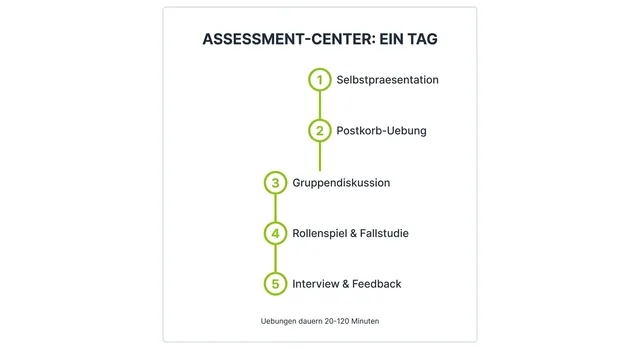
Une invitation à un centre d’évaluation est une bonne nouvelle : vous faites partie des derniers candidats. Pourtant, le terme met beaucoup de personnes mal à l’aise, car peu savent exactement ce qui se passe ce jour-là. En Suisse, ce sont surtout les grands employeurs comme les banques, les assurances, les CFF ou les cabinets de conseil qui utilisent cette méthode, car elle est coûteuse et exigeante et ne se justifie que pour des décisions d’embauche soigneuses. Ce guide vous explique ce qu’est un centre d’évaluation, quels exercices vous attendent, ce que les observateurs évaluent vraiment et comment vous préparer dans les jours qui précèdent.
Qu’est-ce qu’un centre d’évaluation ?
Un centre d’évaluation (assessment centre, AC) est un processus de sélection en plusieurs étapes où plusieurs candidats sont évalués en même temps par des observateurs formés. Au lieu de s’appuyer sur un seul entretien, l’employeur combine différents exercices pour obtenir l’image la plus complète possible de vos compétences. L’idée centrale : une personne qui montre le même comportement dans plusieurs situations indépendantes le montrera très probablement aussi au travail.
Les services carrière de l’Université de Zurich décrivent l’AC comme un processus s’étalant sur un à trois jours et évaluant la personnalité, la concentration, la résistance au stress, l’esprit d’équipe et le potentiel de leadership. Le point clé : un centre d’évaluation ne mesure pas vos connaissances techniques au sens strict, mais votre comportement lorsque la situation devient inconfortable.
Le déroulement typique en Suisse
En Suisse, un centre d’évaluation dure généralement une journée ; pour des postes exigeants, comme les programmes de jeunes cadres, il peut s’étaler sur deux à trois jours. Les exercices durent en règle générale entre 20 et 120 minutes et alternent avec de courtes pauses. Une journée type commence par un accueil et une auto-présentation, se poursuit par des tâches individuelles et de groupe, et se termine par un entretien, souvent suivi d’un premier retour oral.