Resigning in Switzerland is not just a formality. A badly dated letter, or one sent at the wrong moment, can cost you a month of salary, delay your new job or leave a poor final impression. The Code of Obligations sets precise notice periods, and your contract may impose longer ones. As the founder of Careerkit and a career coach based in Zurich, I have reviewed hundreds of Swiss resignation letters. This guide gives you the exact template, the verified legal notice periods and the mistakes to avoid so you can leave cleanly.
What Swiss law says about resignation
Before you write anything, understand the legal frame. In Switzerland, resigning from an open-ended contract is governed by the Code of Obligations (CO). The core rule fits in one sentence: you can leave, but you must respect a notice period and give notice on time.
The contract first, then the law
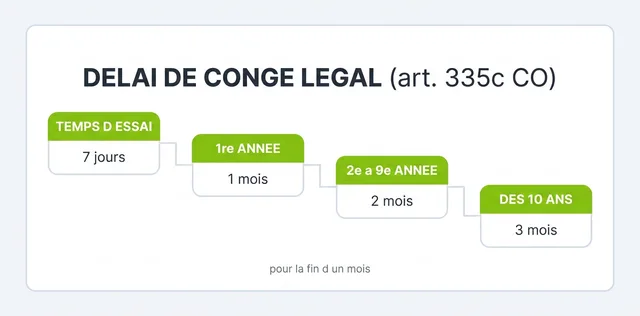
Start with your employment contract and any collective agreement (CCT). The contract may set a longer notice period than the legal minimum, but never a different one for the employer and for you: article 335a CO requires strict parity between both parties. If the contract is silent, the statutory periods of article 335c CO apply.
You do not have to justify your resignation
Reassuring point: you have no obligation to explain your departure. The Swiss Confederation confirms a resignation is valid without a reason. You may thank your employer out of courtesy, but the law asks for no justification. Keep any grievances for the exit interview, not for the letter.
Notice periods in Switzerland (art. 335c CO)
This is the heart of the matter. Unless your contract is more favourable, the legal notice period depends on your seniority, and the contract ends on the last day of a calendar month, never mid-month.