A 2018 eye-tracking study by TheLadders found that recruiters spend an average of just 7.4 seconds on their initial resume scan (HRDive). That is barely enough time to read your name and current job title, let alone your full work history.
Watch: how long your resume should actually be (the data)
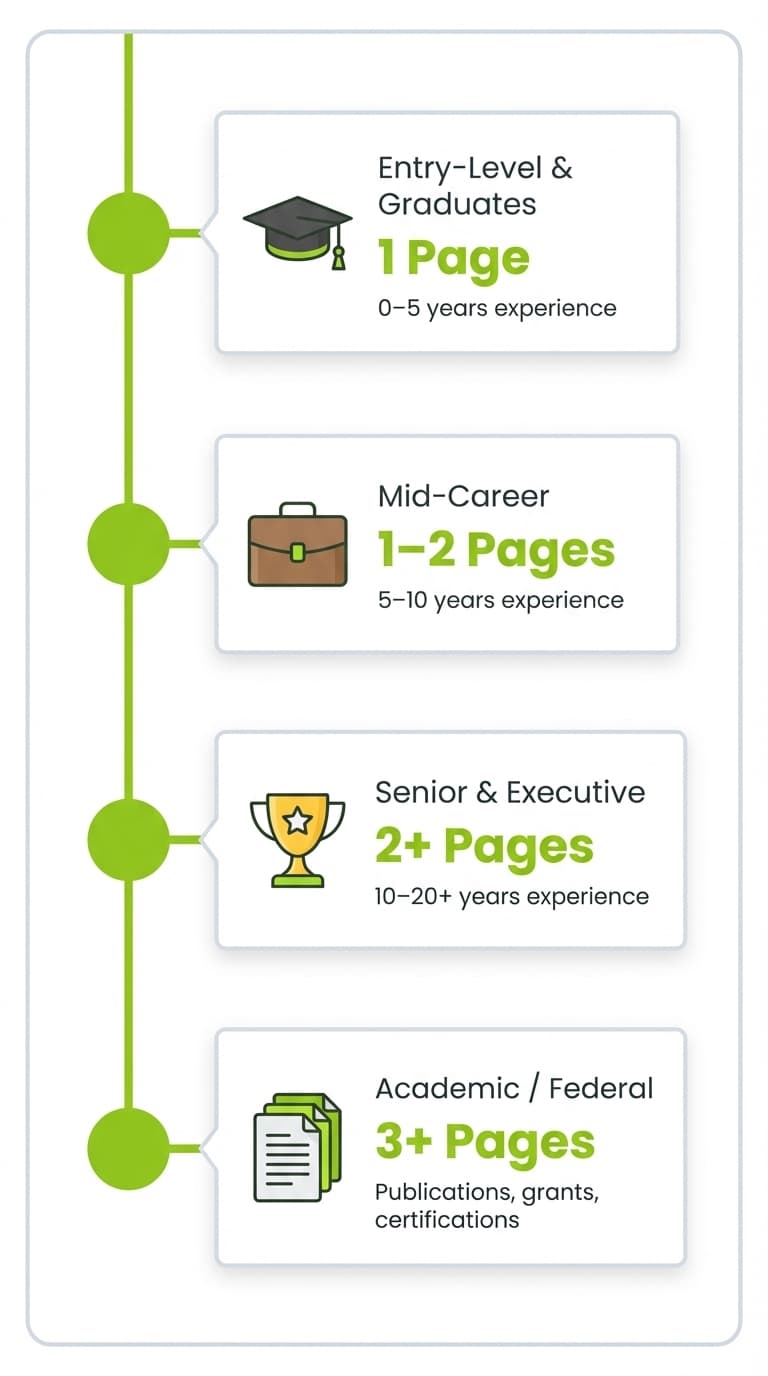
So how long should a resume be to survive that first glance? The answer depends on where you are in your career, what industry you work in, and how much relevant experience you need to communicate. A recent graduate padding out two pages will lose a recruiter just as fast as a senior executive cramming 20 years onto one.
This guide breaks down the right resume length for every career stage, backed by recruiter data and hiring research. You will also learn practical strategies to keep your resume concise without cutting the achievements that actually land interviews. If you are building a resume from scratch, CareerKit's free resume builder can help you get the structure and length right from the start.
How Long Should a Resume Be? The General Answer
Resume length is not arbitrary. The number of pages you use sends a signal to recruiters about your judgment, communication skills, and understanding of professional norms. Here is what the data says about getting it right.