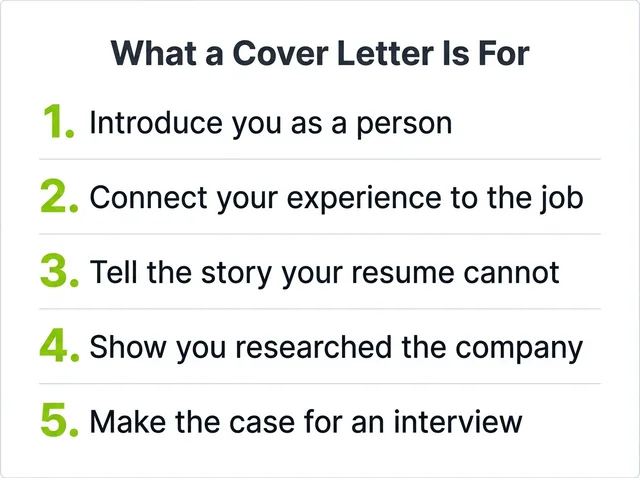
The purpose of a cover letter is to introduce you, connect your experience to one specific job, and give a hiring manager a reason to interview you, in a way your resume cannot. Your resume lists what you have done. Your cover letter explains why it matters for this role, at this company, right now.
Do cover letters still matter? The data says yes.
That distinction is the whole point, and it is where most cover letters fail. They repeat the resume in paragraph form and waste the one chance you have to sound like a person with a reason for applying. This guide breaks down what a cover letter is actually for, the specific jobs it does, how it differs from your resume, and whether it still matters in 2026.
What is the purpose of a cover letter?
A cover letter is a short, one-page document you send with your resume to make the case that you are the right person for a particular job. Career centers like Columbia's describe it as your chance to show, in your own voice, why you want the role and how your background fits it.
Where a resume is a scannable record of facts, a cover letter is a short argument. It takes the two or three things the employer cares about most and connects them directly to your experience, with the context and motivation a bulleted list can never carry. Done well, it is the difference between a reader thinking "qualified" and thinking "I want to talk to this person."
The five jobs a cover letter does
A cover letter earns its place by doing a few specific things at once. Miss these and it becomes filler; hit them and it becomes the reason you get the call.