
Every job seeker asks the same question at the worst possible moment, right as they are about to hit submit. The application says "cover letter (optional)," and now you are stuck. Do you spend another forty minutes writing one, or do you skip it and move on to the next posting? I get asked this constantly, and the honest answer is more useful than the internet myth that cover letters are dead. In most cases a cover letter is still worth writing, and in a job market flooded with AI-generated applications, a good one matters more than it did five years ago. Let me show you exactly when you need one, when you can skip it, and what the people doing the hiring actually do with it.
The short answer: usually yes, sometimes no
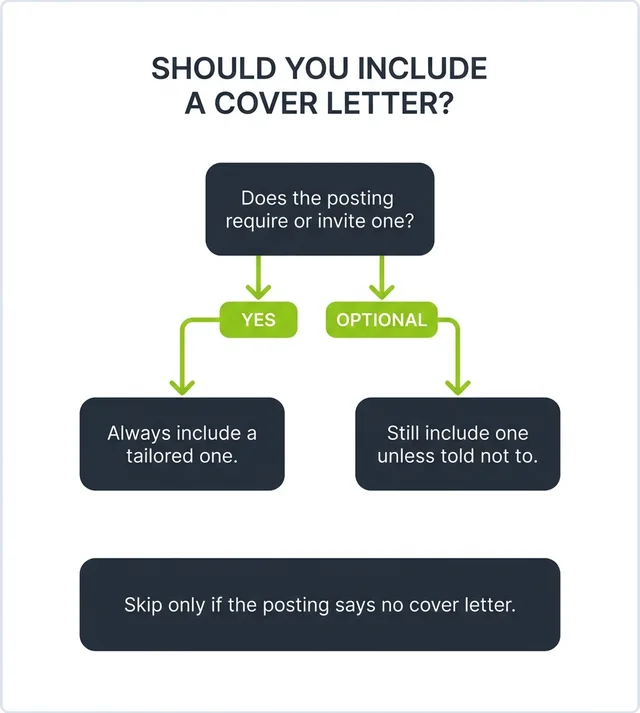
A cover letter is necessary whenever the job posting asks for one, and strongly recommended whenever it is listed as optional. The only time you can safely skip it is when the posting explicitly tells you not to send one, or when the online form gives you no place to attach it. That is the whole rule in two sentences. Everything else in this article is about why that rule holds up and how to make the letter actually count.
The reason people think cover letters are optional is that a loud corner of the internet keeps declaring them dead. The data does not support that. Indeed puts it plainly: a cover letter can only help your application, unless the posting specifically asks you not to submit one. When something can only help and rarely hurts, "optional" is not really a coin flip.
What recruiters actually do with your cover letter
The fear that no one reads cover letters is half true and half misleading. It depends entirely on who is doing the reading and at what stage. Screeners and recruiters handling the first wave of applications are the least likely to read every letter. The people who make the final call read far more of them.
In a survey of 200 recruiters, HR specialists, and hiring managers reported by Human Resources Online, 83 percent said cover letters are an important part of their hiring decision, and 77 percent said they would read a cover letter even when it was not required. Notably, 83 percent also said a great cover letter could win them over even when the resume was on the weaker side. That last number is the one to sit with. Your cover letter is the one place you get to argue for yourself in full sentences.